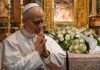











Father Faltas, Vicar of the Custody of the Holy Land, recounted the tragedy in Gaza and denounced international indifference to a tragedy that knows no end.
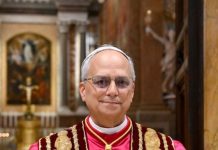
Newsroom (28/08/2025, Gaudium Press )At the Rimini Meeting, The Daily Compass sat down with Franciscan priest Father Ibrahim Faltas, former parish priest of Jerusalem and vicar of the Custody of the Holy Land, now director of the schools of the Holy Land and Casa Nova in Jerusalem. Father Faltas was at the event to present the documentary Osama – On His Way Home, produced by Pro Terra Sancta. In this exclusive interview, he spoke candidly about the dire situation in Gaza and the West Bank, offering a firsthand perspective on the unfolding humanitarian crisis.
Known for his commitment to peace, justice, and reconciliation, Father Faltas has intervened on numerous occasions as a mediator in times of crisis and conflict, witnessing firsthand the suffering of civilian populations in the Holy Land. From the Custody, he has promoted humanitarian initiatives that have saved lives, provided medical assistance, and kept the Christian presence alive in places increasingly affected by violence and exodus.
The Daily Compass: Father Faltas, what is the international community doing to alleviate the suffering of the people in Gaza?
Father Ibrahim Faltas: Nothing. Worse still, the aid drops that several countries are conducting over Gaza are killing people and destroying their tents. Do you know how many people die every day while queuing for food? Killed by the air drops, I mean, as well as by Israeli attacks. The international community must intervene differently. So far, there has only been silence, and no one has stepped in effectively.
TDC: We know that some seriously injured or sick Palestinian children have been welcomed in Italy. Can you tell us more?
FIF: Italy is the first European country to have welcomed three hundred people since the conflict began, including children in need of urgent care and their carers. For this, I must thank Minister Tajani. I went to meet the latest arrivals at Ciampino a few weeks ago: a six-month-old baby with an amputated leg, a girl who weighed thirty-five kilos and died two days later. Have you read about it?
TDC: Yes. Some reports suggested she died of a pre-existing illness, not starvation.
FIF: They can say what they like! If a person weighs 35 kilos, what could be the cause of death? The reality is stark. In Gaza, Mother Teresa’s nuns run a home for disabled people. Before the conflict, there were eighty residents; now, only thirty remain. Why do you think that is? Three hundred people have died of starvation in Gaza in the last month alone.
TDC: What is the fate of Palestinian Christians in this crisis?
FIF: To leave. Christians are fleeing the West Bank. Seven hundred people have left Bethlehem alone. If this continues, the Christian presence in the Middle East will come to an end.
During his presentation at the Rimini Meeting, Father Faltas delivered an impassioned speech, reflecting on the profound changes in the Holy Land since the conflict intensified on October 7, 2023:
“I live in the Holy Land, in Jerusalem,” he said. “I speak to you not as an observer, but as a direct witness to what has been happening every day for far too long. This is a land I love deeply, but since October 7, it has once again become the scene of a tragedy that seems endless. Everything has changed—the rhythm of our days, people’s outlook, even hope itself. I speak to you from within an open wound. A wound that throbs in Jerusalem, Gaza, Bethlehem, and the West Bank.
This wound affects everyone, without distinction. For nearly two years, life has changed radically—not only in Gaza but in our cities and villages. The heartbeat of the Holy Land has shifted. Jews are suffering. Muslims are suffering. Christians are suffering. Pain, hatred, and revenge know no religion. They enter every home, bringing silence, fear, and mourning. But the loudest cry comes from the children of Gaza. They pay the highest price. I have seen children who are wounded, amputees, mutilated, with deep scars in their bodies and souls. Many do not speak. Many cannot smile. An entire generation has been scarred—children who know only war, flight, and hunger. Many have lost limbs, parents, or their voices.
Today, for thousands of families, a tent is their home, under scorching August sun with temperatures above 40 degrees, without electricity, clean water, or sanitation. Sewers are destroyed, and diseases are spreading: infections, viruses, dehydration, especially among the youngest. Human dignity has been crushed. Gaza is a wound carved into the living flesh of humanity—a wound that questions us, challenges us, and condemns us if we ignore it. Beyond the humanitarian catastrophe, monuments, works of art, and millennia-old testimonies to Gaza’s history have been destroyed, as if someone sought to erase the past, the memory, the very identity of a people.
Amid this, the Christians of Gaza endure. I hear from them when they manage to answer the phone, their voices trembling amid the sound of nearby bombs. Even recently, bombs fell near the parish, sowing fear. Yet they remain. They resist. For nearly two years, over six hundred people have lived in the parish premises. The parish priest, Don Gabriel, and Father Joseph live with them, embodying a gospel of pain and solidarity.
The West Bank is also bleeding. In the last two years, 180 Christian families have emigrated. Bethlehem is emptying. What will become of the future of Christians in the Holy Land? Who will guard those sacred places if families, schools, and young people are gone? This is not a conflict of religions or faiths—it is a human tragedy, a massacre. As human beings, we cannot remain indifferent.”
Father Faltas’ words resonate as a call for action, urging the world to confront the humanitarian crisis in Gaza and the West Bank with urgency and compassion.
- Raju Hasmukh with files from InfoCatólica and La Nuova Bussola Quotidiana
Related Images: