












The Archdiocese of Zagreb denounces a new sexuality curriculum as ideological manipulation, calling for parental rights and child protection.
Newsroom (09/12/2025 Gaudium Press ) “It is irresponsible to want to invade the privacy of pupils in an inappropriate way at school, a place that should protect and support them.” With those words, the Archdiocese of Zagreb fired the opening salvo in what has quickly become one of Croatia’s most heated cultural battles of the year.
The trigger was a decision by the City of Zagreb, announced on 4 September 2025, to introduce a new health and sexuality education programme in primary and secondary schools starting next year. While city officials insist the curriculum is evidence-based and focused on child welfare, the Church sees something far more sinister: a Trojan horse for gender ideology and LGBT activism dressed up in the language of progress.
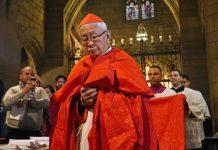
Archbishop Dražen Kutleša has been blunt. Education in matters of sexuality and personal identity belongs first to parents – a right explicitly protected by Article 63 of the Croatian Constitution. “The state cannot usurp that role,” the Archdiocese wrote in its late-September statement. It does not oppose age-appropriate health education, it stressed, but rejects any programme that “smuggles in ideological content incompatible with a Christian understanding of the human person.”
The Church’s fear is that children, at the very moment their personalities are forming, will be exposed to ideas that sow confusion rather than clarity. “Early or ideologically driven sexualisation risks lasting psychological harm,” the statement warned, adding that classrooms must never become “laboratories for social engineering.” Public reaction has been swift.
Parents, parish groups and conservative politicians have rallied behind the bishops. Rumours – some exaggerated, some not – about “sexuality cards” containing intrusive questions have circulated widely on social media, further inflaming distrust. (City authorities insist the cards were part of an unrelated adult workshop and will never reach schools, but the damage is done.)
The standoff is not limited to Zagreb. Similar tensions have flared in Rijeka and Split, and the national government has so far postponed any country-wide programme – a delay many attribute to the Church’s influence in a country where more than 86 % of citizens still identify as Catholic. Europe’s familiar fault line Croatia is hardlyAlone.
In France, the state-mandated EVARS programme (Éducation à la vie affective, relationnelle et sexuelle) has provoked parallel complaints. Guillaume Prévost, Secretary-General of Catholic Education in France, recently criticised what he called “disproportionate state monitoring” of private Catholic schools and called for any sexuality education to be firmly rooted in Christian anthropology.
From Warsaw to Lisbon, the same question keeps resurfacing: how far can the state go in reshaping children’s understanding of identity, sexuality and the body before it collides with parental rights and religious conviction? A deeper question of anthropology For the Croatian bishops, the fight is ultimately about the vision of the human person. In their eyes, a child is not raw material to be moulded by the latest ideological fashion, but a being created with inherent dignity and an identity that precedes politics.
As the Archdiocese put it, quoting a theme dear to Pope Leo XIV: the Church can never remain silent when the truth about humanity is at stake – even if speaking that truth puts it at odds with the spirit of the age. Whether Zagreb’s programme will be modified, diluted or imposed unchanged remains to be seen. What is already clear is that Croatia’s Catholic Church has chosen this hill to defend – and, for now at least, a majority of Croatian parents appear ready to stand with it.
- Raju Hasmukh with files from Tribune Chretienne
Related Images: