








Critics slam Hong Kong’s Cardinal Chow for denying religious persecution, citing Zen’s silencing, Lai’s trial, and national security laws as evidence.
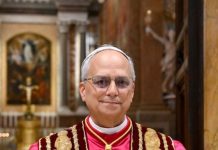
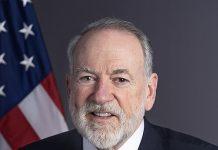
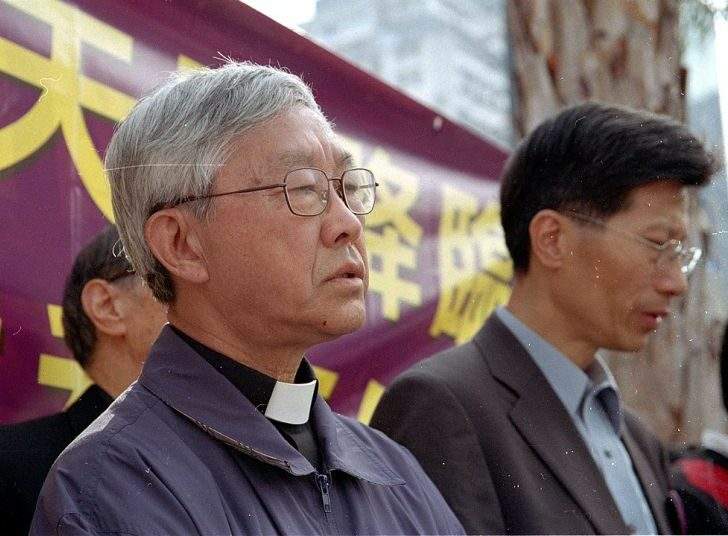
Newsroom (29/09/2025, Gaudium Press ) Cardinal Stephen Chow Sau-yan of Hong Kong is facing sharp criticism for claiming that religious persecution is absent in the Chinese-administered territory and that Beijing is committed to preserving religious freedom there. Observers point to mounting evidence—including the silencing of Cardinal Joseph Zen Ze-kiun, the prolonged trial of Catholic media tycoon Jimmy Lai, and restrictive national security laws—as directly contradicting the cardinal’s assertions.
Speaking at a recent event in the Australian Diocese of Parramatta, hosted by Bishop Vincent Long Văn Nguyễn, Cardinal Chow invited skeptics to “come to Hong Kong and see for yourself” that religious persecution does not exist. According to The Catholic Weekly, a Sydney diocesan newspaper, Chow stated, “Beijing wants to keep religious freedom intact in Hong Kong, because Hong Kong is important for China.” He also described the secretive Vatican-China provisional agreement on bishop appointments as complex, urging against viewing it through a “dualistic paradigm.” Chow further noted that China’s government takes the Catholic Church seriously, is well-informed about it, and that Communists, despite their atheistic ideology, “yearn for love” and “yearn for respect.”
The cardinal also minimized the hardships faced by his predecessor, Cardinal Zen, who was convicted in 2022 for failing to register a fund supporting pro-democracy protesters in a trial widely criticized as politically motivated. “Not one day was he imprisoned, not one day was he under house arrest,” Chow said, dismissing portrayals of Zen’s treatment as exaggerated by Western media.
Evidence of Repression
Cardinal Chow’s remarks stand in stark contrast to documented restrictions on religious and civil liberties in Hong Kong. The 2020 national security law, along with additional measures enacted in 2025, has imposed significant constraints on religious groups and the general populace. Priests now face up to 14 years in prison for refusing to break the seal of confession in cases involving suspected “crimes of treason.” Catholic and Protestant clergy have been threatened with prosecution for delivering “seditious” homilies, and religious school curricula, developed in collaboration with the Hong Kong Diocese, have been altered to promote socialist values and diminish the Pope’s authority as part of China’s “sinicization” policy.
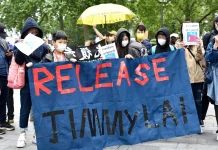
The case of Jimmy Lai, a prominent Catholic and media tycoon, underscores the crackdown. Arrested in 2020 and charged with conspiracy to collude with foreign forces and publishing seditious material, Lai has endured a 156-day trial between 2023 and 2025. He remains in custody, has pleaded not guilty, and awaits a verdict. The United States Commission on International Religious Freedom (USCIRF) has repeatedly flagged concerns about eroding religious freedoms in Hong Kong.
Cardinal Zen, though not imprisoned, has been effectively silenced by the Chinese Communist Party (CCP) and the national security law, with his passport confiscated. A Hong Kong Church source, speaking anonymously to the National Catholic Register, remarked, “It is quite clear that Stephen Chow is now being very bold. He knows that Cardinal Zen is not in a position to speak, and so he is speaking in this way.”
Expert Rebuttals
Critics have labeled Cardinal Chow’s claims as disconnected from reality. Steven Mosher, president of the Population Research Institute and a seasoned sinologist, called the cardinal’s assertion that Beijing prioritizes Hong Kong’s religious freedom “laughable.” He drew parallels to unfulfilled assurances from 30 years ago that the CCP would honor the Sino-British Agreement guaranteeing Hong Kong’s autonomy for 50 years. “The CCP tore up that agreement a decade ago, saying it was only of historical interest,” Mosher told the Register. “The walls are closing in on the Church in Hong Kong more slowly than in China, but they are closing nonetheless.”
Nina Shea, director of the Center for Religious Freedom at the Hudson Institute, emphasized that neither Cardinal Chow nor Cardinal Zen is free to openly criticize the CCP. “Beijing’s media outlet in Hong Kong threatened to shut down Catholic schools if Zen and other Church leaders did not submit to CCP dictates,” she said. Shea also highlighted the inability of Hong Kong’s Catholic leaders to speak out against Lai’s persecution or the ongoing repression of clergy in mainland China.
In a Sept. 25 column for Catholic World Report, George Weigel, a senior fellow at the Ethics and Public Policy Center, criticized Cardinal Chow’s inaction, particularly his failure to support Jimmy Lai or his family. Weigel contrasted Chow’s stance with Cardinal Zen’s outspoken advocacy, invoking St. Augustine’s warnings against negligent shepherds.
Calls for Vatican Action
Shea argued that the silence of Hong Kong’s Catholic leaders places a greater responsibility on Pope Leo to address the persecution of Catholics in the region. She urged the Vatican to resist demands from China’s state-run church, now fully integrated into the CCP’s United Front Work Department, to reinterpret the Bible in alignment with socialist ideology. “The fact that these prominent Catholics are unable to speak up for those suffering religious persecution makes it all the more incumbent for the Pope to speak up for them,” Shea said.
As Hong Kong’s religious and civil liberties face increasing pressure, Cardinal Chow’s remarks have sparked a broader debate about the Church’s role in confronting authoritarian regimes and defending its members under persecution.
- Raju Hasmukh with files from NC Register
Related Images: