

























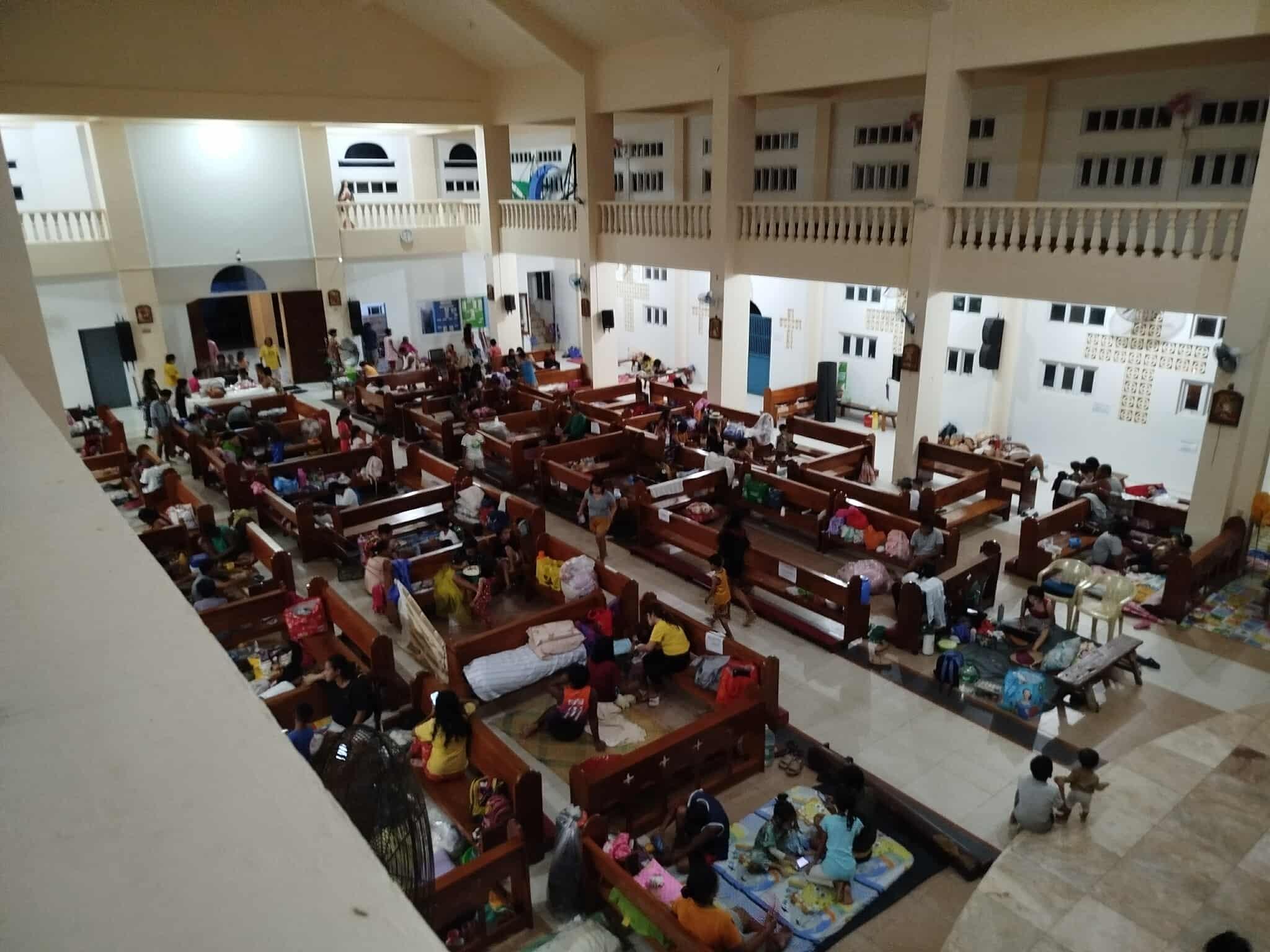
Amid the destruction, faith communities stepped up as beacons of hope. Parishes across Bicol, under storm signal warnings, flung open their doors to evacuees
Newsroom (26/09/2025, Gaudium Press ) As Severe Tropical Storm Opong, internationally known as Bualoi, unleashed widespread devastation across the Philippines‘ eastern islands on Friday, September 26, 2025, Catholic churches in the hard-hit Bicol region transformed into vital sanctuaries for thousands fleeing life-threatening floods, landslides, and howling winds.
The storm, which made landfall over Eastern Samar late Thursday before barreling through Masbate, Romblon, and Mindoro provinces with maximum sustained winds of 110 km/h and gusts up to 150 km/h, has claimed at least four lives and left six people missing, according to consolidated reports from disaster officials. The fatalities include two victims buried in landslides in Samar province and three others who drowned in flash floods sweeping through low-lying areas. In Masbate, one resident was struck by a falling tree, another drowned amid surging waters, and a third succumbed to similar storm-related injuries, underscoring the peril in rural communities where emergency access remains limited.
The toll could rise as authorities validate additional reports, including five missing fishermen whose boats were battered by towering waves off the coast. Nationwide, Opong has displaced over 433,000 people, with relentless rains triggering catastrophic flooding that submerged entire villages, toppled power lines, and blocked roads with debris and mudslides. In Eastern Samar alone, more than 22,000 families—or some 78,000 individuals—have been affected, many losing homes to the storm’s fury. Masbate province endured significant infrastructure damage, including a total blackout that hampered rescue efforts, while in Negros Occidental, firefighters rescued 57 residents from rising waters in Bacolod City. Landslides in Sipalay City and flooding in multiple towns like Silay and La Castellana further compounded the chaos, stranding over 5,000 passengers at ports and airports.
Compounding the misery, Opong follows closely on the heels of Super Typhoon Ragasa, pushing the cumulative death toll from recent cyclones to 14, with over 1.2 million people impacted across the archipelago. Climate experts attribute the intensified storm season to warming oceans, exacerbating vulnerabilities in flood-prone regions like Bicol, situated about 400 kilometers (250 miles) southeast of Manila.
Amid the destruction, faith communities stepped up as beacons of hope. Parishes across Bicol, under storm signal warnings, flung open their doors to evacuees seeking higher ground from inundated coastal and low-lying areas. In Albay province, St. Dominic de Guzman Parish in Sto. Domingo, Our Lady of Salvation Parish in Anislag, and St. Roch Parish in Taysan, Legazpi City, began sheltering families as early as Wednesday morning. The Diocese of Legazpi mandated all parishes, chapels, and halls to serve as temporary evacuation centers, a directive that proved lifesaving as winds shredded roofs and rains turned streets into rivers.
By Thursday evening, Saints Peter and Paul Parish in Polangui, Albay, was housing 87 families—totaling 347 individuals—according to a parish Facebook update at 6:30 p.m. In neighboring Sorsogon, St. Anthony of Padua Parish in Gubat readied its compound for incoming residents, with dozens already hunkering down as conditions deteriorated. Our Lady of the Most Holy Rosary Parish Church in Casiguran hastily rearranged pews to accommodate more arrivals, its update highlighting the urgency as Opong intensified.
In Camarines Sur, the Archdiocese of Caceres called for collective prayer through an Oratio Imperata, imploring divine protection: “Let us join our minds and hearts together in prayer as we seek maternal protection of our Ina and the mercy of the Holy Face of her Son to spare us from the wrath of the forthcoming typhoon.”
Parish volunteers and workers mobilized across the region, laying out mats, distributing food packs, water, and basic hygiene supplies, while coordinating with local disaster teams. Authorities warned that flood-prone zones and coastal communities faced ongoing threats from storm surges exceeding 3 meters, urging immediate evacuation to safer elevations.
As of 5:00 a.m. Friday, Opong was positioned over Masbate in Bicol, maintaining its strength before heading toward the West Philippine Sea. Forecasters predict it may re-intensify into a typhoon post-landfall, potentially affecting northern Vietnam next. Community support groups and church facilities vow to remain operational throughout the crisis, providing refuge until the storm fully passes.
Recovery efforts are underway, with national agencies deploying aid to the worst-affected areas. Yet, as debris flows clog roads and power outages persist, the full extent of Opong’s wrath—marked by collapsed walls, uprooted trees, and submerged farmlands—serves as a stark reminder of the Philippines’ perennial battle against increasingly ferocious weather events.
- Raju Hasmukh with files from AP, Reuters and rvasia.org
Related Images: