


















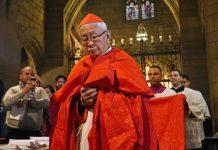
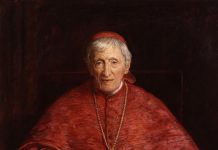

COP30 in Belém: Is the Church’s “ecological conversion” drifting from John Paul II’s moral roots into political activism, risking its core mission of soul salvation?
Newsroom (06/11/2025, Gaudium Press ) As the 30th United Nations Climate Change Conference (COP30) commences in the Amazonian city of Belém from November 10 to 21, 2025, the Catholic Church is poised for a prominent role, marked by declarations, prayers, and roundtable discussions. This engagement underscores a growing adoption of ecological rhetoric within the Church, with “ecological conversion” emerging as a ubiquitous theme. Yet, this approach raises a critical question: Does it safeguard the Church’s primary mandate—the conversion of souls—or veer toward a politicized framework?
Pope John Paul II addressed this tension in his 1990 World Day of Peace message, Peace with God the Creator, Peace with All Creation. Rarely delved into deeply despite frequent citations, the text offers a theological anchor for ecology rooted in morality rather than policy. “If man is not at peace with God, the earth itself is not at peace,” he declared, framing environmental crises as extensions of spiritual and moral disorder in humanity.
John Paul II emphasized that ecological issues stem not merely from managerial failures but from conscience lapses. While acknowledging industrial and political factors, he insisted that harm to creation reflects harm to the Creator. He called for a “serious” lifestyle revision, advocating “austerity, temperance, discipline, and a spirit of sacrifice” as daily imperatives.
This contrasts sharply with contemporary Church statements, such as the French Bishops’ Conference prayer for COP30, which prioritizes “ecological transition” and “climate justice.” For John Paul II, ecology demanded personal moral conversion tied to Christian ethics of renunciation; today, it often appears as a collective slogan for social reform, sometimes unmoored from concepts of sin and salvation.
The pope extended his analysis to link environmental degradation with disdain for human life: “Pollution or the destruction of the environment is the result of a reductive and unnatural vision which sometimes reveals a genuine contempt for humanity.” Societies that undermine unborn life, manipulate biology, or erode family structures, he argued, cannot authentically protect nature. This precursor to “integral ecology” centered human dignity in creation’s stewardship.
As COP30 unfolds, John Paul II’s insights should guide the Church. Prayer for the planet is fitting, but equating salvation with summit outcomes risks diluting its mission. The Church is not an environmental NGO but a bearer of supernatural hope. “Christians know that their duties within creation and their duties toward the Creator are an integral part of their faith,” he noted. Authentic Christian ecology unites love for earth with love for God, culminating in Christ’s reconciliation of humanity and creation.
In Belém, amid pressures for global alignment, the Church must resist blending into secular discourse. Its voice echoes Christ: True peace with creation flows from peace with God.
- Raju Hasmukh with files from Tribune Chretienne
Related Images: