

















Arunachal Pradesh revives 1978 anti-conversion law under court order; Christian leaders oppose rules requiring state permission for faith changes.
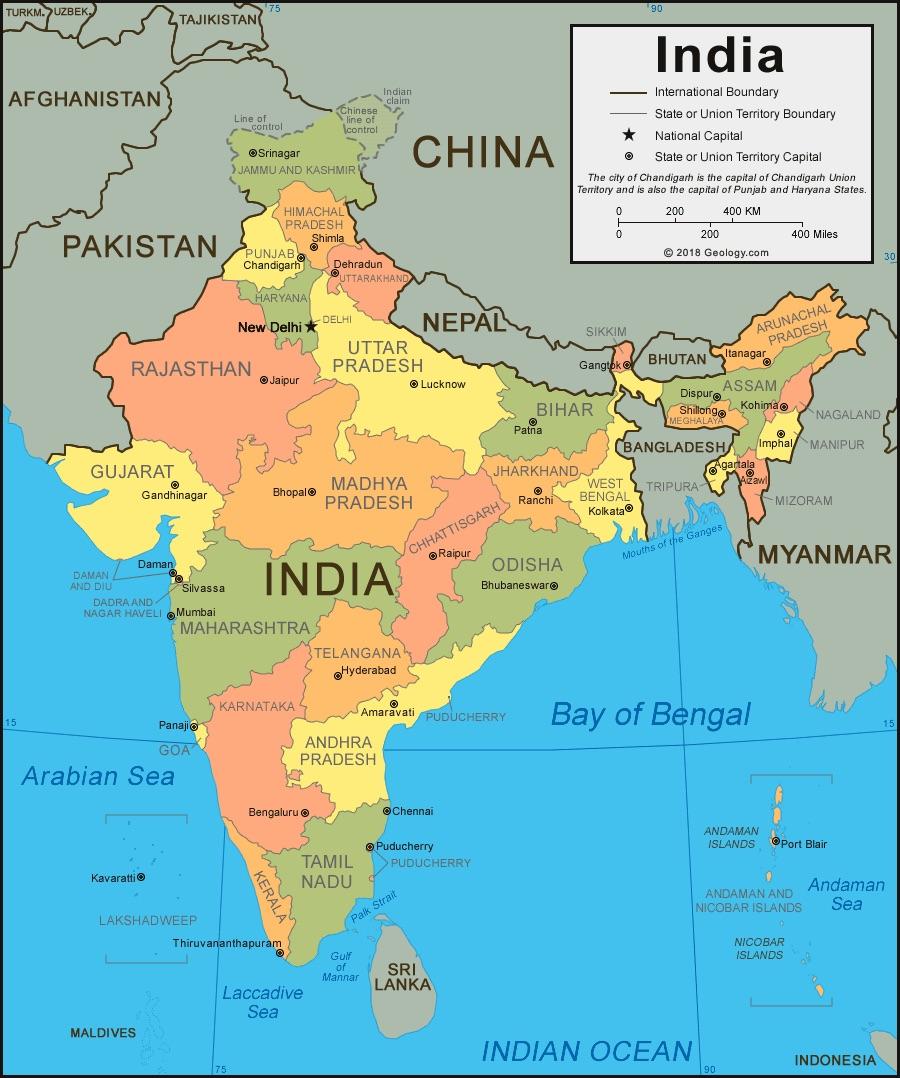
Newsroom (19/11/2025 Gaudium Press ) Christian organizations in India’s northeastern state of Arunachal Pradesh have renewed their strong opposition to efforts to operationalize a decades-old anti-conversion law, describing the proposed regulations as a direct violation of constitutional guarantees on religious freedom.
The state government last week constituted a high-level committee, headed by retired Gauhati High Court judge Justice Brojendra Prasad Katakey, to finalize rules for the Arunachal Pradesh Freedom of Religion Act, 1978 – legislation that has remained dormant for nearly five decades. Justice Katakey replaces State Home Minister Mama Natung as chairman. The panel also includes two ministers, two senior bureaucrats, and representatives from six organizations, notably the inter-denominational Arunachal Christian Forum (ACF) and the Arunachal Pradesh unit of the Vishwa Hindu Parishad (VHP), a Hindu nationalist outfit.
The committee’s formation follows a September directive from the Gauhati High Court mandating the state to frame rules “within the constitutional framework” and at the earliest. The order stemmed from a public-interest petition filed by advocate Tambo Tamin, former secretary of the Indigenous Faith and Cultural Society of Arunachal Pradesh.
At the heart of the controversy is a provision requiring any person wishing to convert to another religion to obtain prior permission from the district deputy commissioner.
“Why should one go to the deputy commissioners? Religion is a matter of personal choice,” said Tarh Miri, president of the Arunachal Christian Forum and the ACF’s representative on the committee. Speaking to UCA News on October 19, Miri insisted that the forum “has repeatedly opposed and will oppose the bill as it targets and discriminates against Christians” and “curtails religious rights.”
Miri warned that implementation of the law would disproportionately harm indigenous communities, alleging that the state government is acting under pressure from right-wing Hindu groups that routinely accuse Christians of fraudulent conversions among tribal populations for political gain.
James Techi Tara, a former ACF president, echoed the criticism, stating that the forum has long rejected both the “content and intent” of the 1978 Act because it is “riddled with ambiguities” that could undermine Article 25 of the Indian Constitution, which guarantees freedom to profess, practice, and propagate religion.
Originally passed in 1978 but never notified, the law prescribes imprisonment and fines for conversions effected “by use of force or inducement or by fraudulent means.” Proponents at the time framed it as a safeguard for indigenous faiths against the spread of both Christianity and institutional Hinduism.
The renewed push to enforce the legislation gained momentum after the Bharatiya Janata Party (BJP) secured victory in the 2024 state assembly elections. Hindu nationalist organizations and followers of indigenous faiths have openly supported the move.
Kamjai Taism, a prominent indigenous faith leader, defended the Act, telling journalists: “This act is for people of all faiths in Arunachal. It will serve all. This is not at all unconstitutional.”
Arunachal Pradesh, which shares borders with China, Myanmar, and Bhutan, had a population of approximately 1.3 million in the 2011 census. Christians constitute about 30 percent of the population, Hindus 29 percent, and adherents of indigenous faiths 26 percent.
As the Katakey committee begins deliberations, Christian leaders remain pessimistic about influencing the outcome but vow to continue resisting any rules they believe infringe on fundamental rights. The panel is expected to submit its recommendations to the state government shortly, potentially setting the stage for a wider constitutional and political confrontation over religious freedom in the strategically sensitive frontier state.
-Raju Hasmukh with files from Uca News
Related Images: