



















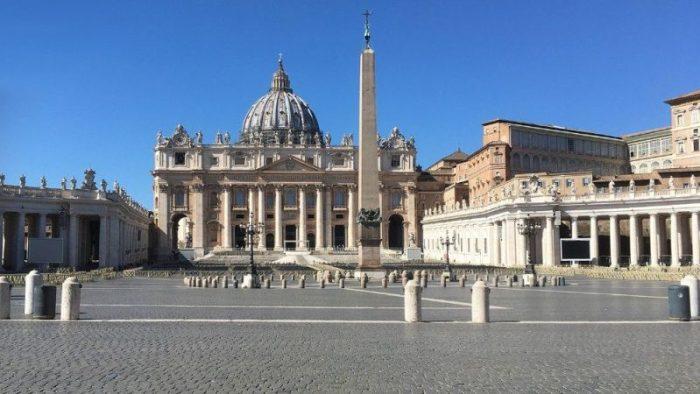
Chris Pratt guides viewers into the Vatican Necropolis and St. Peter’s tomb in a landmark 2026 documentary marking 400 years of the basilica.
Newsroom (09/12/2025 Gaudium Press ) In an unprecedented marriage of Hollywood star power and Vatican archaeology, Chris Pratt is filming deep beneath St. Peter’s Basilica, becoming the public face of a documentary that will open one of Christianity’s most sacred and restricted sites to the world.
The still-untitled project, a collaboration between Vatican Media, the Fabbrica di San Pietro, and U.S.-based AF Films, is scheduled for release in 2026 to coincide with the 400th anniversary of the dedication of the current St. Peter’s Basilica. For centuries, the Vatican Necropolis (an ancient Roman cemetery lying directly under the basilica) and the tomb believed to belong to the Apostle Peter have been accessible only to scholars and small, carefully vetted tour groups. The new film intends to change that.
Speaking to Vatican News from the excavation zone, Pratt called the experience “an extraordinary privilege.”
“I’m still processing the level of trust they’ve placed in us,” the actor said. “This isn’t about spectacle. It’s about shining a light on the very foundations of a faith that began with a fisherman who was crucified upside-down under Emperor Nero.”
Directing the feature is acclaimed Spanish filmmaker Paula Ortiz, whose visually poetic style will be paired with a script by Andrea Tornielli, editorial director of the Dicastery for Communication, and on-site guidance from Pietro Zander, the veteran conservator of the Fabbrica di San Pietro.
Together, they are crafting what Vatican sources describe as both a historical reconstruction and a contemplative journey. Viewers will follow the story from the sprawling pagan and early Christian necropolis on Vatican Hill, through Constantine’s fourth-century decision to level the terrain and build the first basilica directly over Peter’s presumed grave, to the dramatic 20th-century rediscovery of the site.
That rediscovery began in secrecy in 1940, when Pope Pius XII authorized excavations beneath the high altar. A decade of clandestine digging ended in 1950 with the Vatican’s announcement that archaeologists had located what they believed to be Peter’s tomb. In 1968, Pope Paul VI went further, declaring that bones found in a nearby niche (modest fragments wrapped in precious purple cloth threaded with gold) could “with moral certainty” be considered the remains of the apostle himself.
For the first time, cameras have been granted extended extraordinary access to the narrow, climate-controlled passages of the necropolis. The production is capturing never-before-filmed angles of second-century mausoleums, early Christian graffiti, and the simple brick loculus identified as “Trophy of Gaius” (the ancient marker described by the Roman priest Gaius in AD 200 as the resting place of Peter’s relics).
Ortiz has described her approach as “descending with reverence,” aiming to let the stones and silence speak before any narration intrudes. Pratt, serving as both on-camera guide and interviewer of archaeologists, theologians, and conservators, will lead audiences through the same tight corridors where popes have walked only a handful of times.
The 2026 release will mark exactly four centuries since the dedication of Michelangelo- and Maderno-designed St. Peter’s in 1626 (an anniversary the Vatican sees as the perfect moment to reflect on the site’s deeper, hidden roots.
In an era when faith and history are often reduced to sound bites, the project’s backers say they want to offer something rarer: a contemplative, visually stunning invitation to stand (virtually) at the physical and spiritual ground zero of Western Christianity.
- Raju Hasmukh with files from Zenit News
Related Images: