















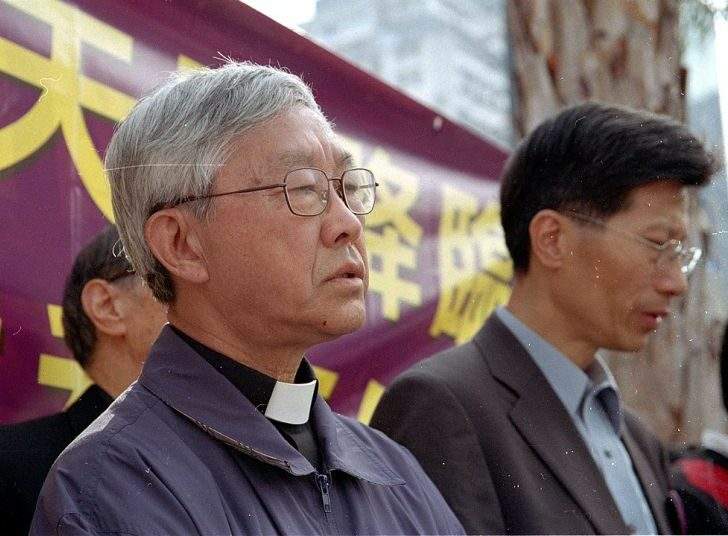
Cardinal Joseph Zen responds to personal attacks over China bishop appointments and defends his warning that unchecked synodal “pluralism” risks fracturing the Church like the Anglicans.
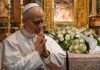
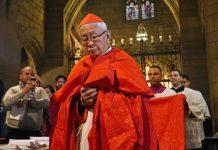
Newsroom (11/12/2025 Gaudium Press ) Cardinal Joseph Zen Ze-kiun, the 93-year-old bishop emeritus of Hong Kong and long the most outspoken critic of the Holy See’s dialogue with Beijing, has published a measured but firm rebuttal to an article that accused skeptics of the latest episcopal appointments in mainland China of acting out of “stupidity,” “malice,” or a “distorted personality.”
The article in question, written by Father Han Qingping, had celebrated the retirement of Bishop Augustine Zhang Weizhu and the consecration of Bishop Anthony Li Jianlin in the diocese of Xinxiang as evidence of improving relations between the Vatican and the Chinese government under the terms of the 2018 provisional agreement. Father Han described the developments as a scenario that “undoubtedly should make everyone happy.”
Cardinal Zen agrees that the surface facts appear positive. Yet he expresses deep regret that the piece ends with personal attacks against those, including “a certain cardinal,” who continue to voice reservations.
In his response, published on his personal blog, the cardinal writes with characteristic irony: “I do not admit to being a bad person or having a distorted personality, but I was certainly stupid enough to take it personally.”
He stresses that he has made no public comment on the specific Xinxiang case and that his broader concern is not polemical but pastoral: the prolonged suffering of the faithful in mainland China, many of whom belong to communities that have resisted integration into structures controlled by the state-sanctioned Chinese Catholic Patriotic Association.
Father Han, the cardinal notes, used the Xinxiang affair as a springboard to revisit an entirely different criticism Zen had leveled against the ongoing Synod on Synodality. The cardinal had previously described certain possible outcomes of the synodal process as “ecclesiastical suicide,” a phrase that Father Han presented as a blanket opposition to synodality itself.
Zen rejects the caricature. “I was not talking about all synodality,” he clarifies, “but about the misguided use of the final document.”
He points out that both the Synod’s General Secretary, Cardinal Mario Grech, and its Relator, Cardinal Jean-Claude Hollerc, have openly acknowledged that the synthesis document will elicit “very different interpretations—from enthusiasm to strong opposition.”
“If each region acts according to its own reading,” Zen warns, “the Church will cease to be a unified Church.”
Drawing a stark historical parallel, the cardinal recalls the trajectory of the Anglican Communion. After decades of allowing doctrinal pluralism on core issues, the Anglican Church “has been reduced to 10% of its size,” he writes, while roughly 80% of the remaining Anglicans have distanced themselves from the Archbishop of Canterbury by forming the Global Anglican Future Conference (GAFCON).
For Zen, the lesson is clear: a unity without doctrinal coherence eventually becomes disintegration. He insists his alarm is not personal animus but an ecclesial duty to safeguard the Church’s oneness, especially for believers in places like China, where external political pressures already threaten to disorient the faithful.
In a closing note devoid of bitterness, the cardinal reiterates that his only desire is to see the Church in China—and the universal Church—remain one, holy, catholic, and apostolic, even amid complex diplomatic negotiations and synodal experiments.
As the Vatican prepares to release the final document of the Synod on Synodality and continues to implement its confidential agreement with Beijing, Cardinal Zen’s intervention ensures that voices of caution from within the College of Cardinals will not be silenced, whatever labels are applied to them.
- Raju Hasmukh with files from oldyosef.hkcatholic.com
Related Images: