

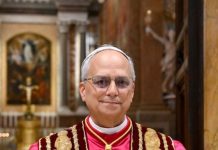








Cardinal Louis Raphael Sako voices deep concern over Iraq’s instability, regional tensions, and fears for Christians amid political confusion.
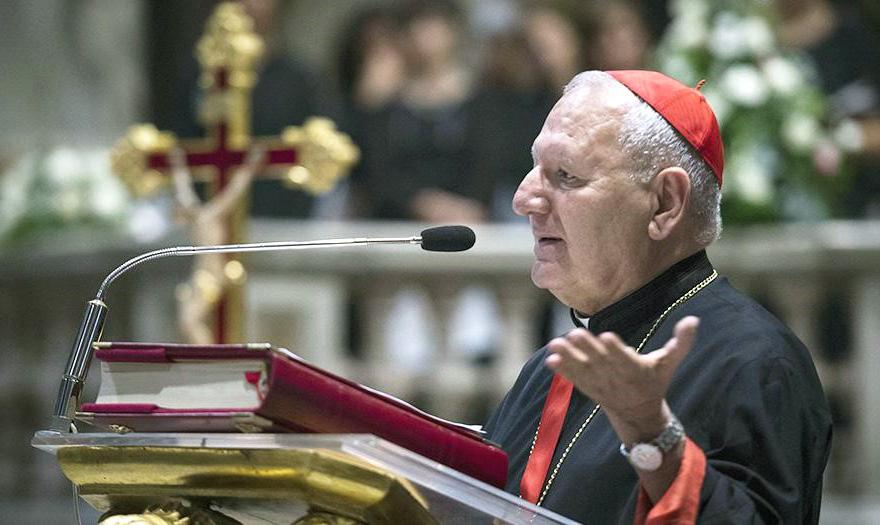
Newsroom (29/01/2026 Gaudium Press ) In the heart of Baghdad, as anxiety sweeps through the Iraqi capital and the region trembles under renewed geopolitical tension, Cardinal Louis Raphael Sako, the Chaldean Patriarch of Baghdad, has voiced his “sadness and great concern.” Speaking to AsiaNews after a three-day retreat of reflection and prayer, the cardinal described a nation weighed down by fear, silence, and political instability—conditions he believes could drag Iraq back into a spiral of violence.
“Several politicians have asked me to speak, to make the voice of a religious authority heard,” he said, lamenting that both institutional and religious figures have been largely silent in recent weeks. The cardinal’s alarm centers on Iraq’s fragile political transition, the growing threat of conflict between Iran, the United States, and Israel, and the deep uncertainty facing Iraqi Christians still recovering from years of war and displacement.
Rising Political Instability
At the core of Iraq’s internal unease lies the repeatedly postponed election of a new president, a largely ceremonial position but key to unlocking the formation of a new government. The extended delay has only deepened divisions within parliament, where the emerging majority appears to favor former Prime Minister Nouri al-Maliki—a figure whose return, Cardinal Sako noted, has already drawn strong rejection from Washington.
Al-Maliki, who governed Iraq between 2006 and 2014, is viewed by the United States as bearing responsibility for the country’s severe economic decline and for policies that indirectly paved the way for the rise of the Islamic State. Despite these accusations, his supporters claim his leadership could restore political order after years of paralysis. Meanwhile, confusion and conspiracies continue to cloud the political atmosphere: a fake letter, falsely attributed to the Saudi Foreign Minister and urging al-Maliki to withdraw, has recently circulated online, adding to what Sako calls “a climate of fear and misinformation.”
Fear and Silence Among Leaders
Behind the apparent calm in religious and political circles lies a profound apprehension. According to Cardinal Sako, many Shiite clerics remain silent out of fear of Iranian retaliation, revealing the deep entanglement of Iraqi and Iranian interests. “Not only in Iraq, but throughout the region—from Syria to Lebanon—people are very worried,” he explained. “Christians, who have already paid a heavy price through displacement and emigration, now live in fear once more. They cannot build a future without security and stability.”
The Patriarch stressed that Iraq’s dependence on oil revenue—accounting for roughly 90% of its economy—exacerbates existing vulnerabilities. The economic fragility, coupled with the reappearance of Islamic State detainees reportedly being transferred from Syria to Iraq, feeds public uncertainty and anger. “This country never seems to find peace,” Sako reflected, “and the people’s hope fades with each new crisis.”
Regional Tensions and Geopolitical Shadows
Cardinal Sako’s concern extends beyond Iraq’s borders. He pointed to a dangerous escalation unfolding between Iran and the United States, echoing fears of a wider conflict that could engulf the region. “There are threats of an American attack on Iran,” he warned, “and if that happens, the consequences will not stop at Iraq—they will ripple through Lebanon, Syria, and the entire Middle East.”
Communication with neighboring Iran has grown increasingly difficult. “I have not been able to speak with the Chaldean faithful in Iran,” the cardinal reported. “Everything is closed, the internet is down, and contact is impossible.” These isolation measures, he suggested, further highlight the volatility of the moment and the fragility of religious and social life across borders.
The Need for Awareness and Hope
Reflecting on Iraq’s enduring crisis, Cardinal Sako lamented the lack of “deep awareness” in Eastern societies about the geopolitical transformations reshaping their world. What is needed, he argued, is not only political stability but a renewed sense of responsibility and critical thought about the forces influencing national and regional decisions.
In the face of fear, the cardinal continues to look toward prayer as a source of light and endurance. “Prayer comforts and gives hope,” he said. “It helps us to see what others do not see, to act with faith even when the future feels impossible to predict.”
For Iraq’s Christians—and for many others watching new storms gather over the Middle East—those words offer both a warning and a plea: that faith, awareness, and dialogue may yet prevent another descent into chaos.
- Raju Hasmukh with files from Asianews.it
Related Images: