










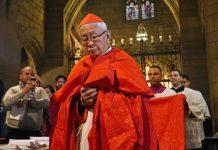

At Brussels Cathedral’s 800th anniversary, Cardinal Parolin urges Europe to reclaim faith’s bold witness amid modern fragility and loss of direction.
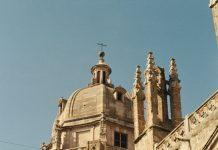
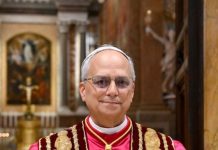
Newsroom (12/01/2026 Gaudium Press ) In the heart of Brussels, where eight centuries of history breathe through the limestone columns of the Cathedral of Saints Michael and Gudula, Cardinal Pietro Parolin delivered a message that felt both timeless and urgent. Marking the 800th anniversary of the city’s most iconic cathedral, the Holy See’s Secretary of State called on Europe to recover its “Christian boldness” and face its spiritual disorientation with renewed courage.
Before an audience that included members of the Belgian royal family and hundreds of worshippers, Parolin spoke of faith not as a relic of the past, but as a living force unfolding “at the heart of history, in concrete places and through real communities.” Even before the cathedral’s Gothic spires rose in the 13th century, he noted, a small chapel dedicated to Saint Michael had already rooted Christianity deep in Brussels’ soil — a quiet testimony to slow, faithful growth across generations.
That legacy, Parolin reflected, is the heart of the Church’s identity: not a sudden creation, but a continuity of fidelity. “Each person receives, safeguards, and passes on what has been entrusted to them,” he said, a rhythm of trust stretching through the centuries.
Saints Michael and Gudula: Guardians for a Tired Age
Parolin drew new meaning from the cathedral’s two patrons. Saint Michael, the archangel warrior, symbolizes discernment and vigilance; Saint Gudula, a local saint known for her steadfast service, represents daily faithfulness. Together, they shape a vision of a Church able to unite “truth and service, firmness and gentleness” — qualities he suggested Europe must now relearn.
Europe’s Fragility and a Test of Spirit
Standing in the city that hosts many of the European Union’s institutions, Parolin turned his gaze toward the continent itself. Brussels, he said, was born from encounter and reconciliation — ideals that seem fragile today. Europe, he warned, is traversing “a period of profound fragility,” scarred by social division, fear, and cultural uncertainty.
Christianity, he argued, does not offer political “solutions,” but it does safeguard an ethical compass. “It reminds society that human dignity precedes every calculation,” Parolin said, emphasizing inclusion over exclusion and peace founded on mutual recognition rather than fear.
Beyond Numbers: The Church and Relevance
The cardinal’s remarks also wrestled with an inward challenge. Echoing the spirit of the postwar founders — Robert Schuman, Konrad Adenauer, and Alcide De Gasperi — he urged a rebuilding not just of institutions but of trust. The Church, he warned, faces its own crisis of confidence. Its greatest threat, he said, is not dwindling attendance, but irrelevance: “It is not numerical weakness that undermines Christian witness, but the loss of evangelical boldness.”
Against this backdrop, Parolin described the Church as a companion to history — not above it, nor merged with it, but walking alongside humanity in discernment and service.
A Prayer for Renewal
As the ceremony closed, Parolin entrusted Brussels, Belgium, Europe, and the world to the intercession of Mary. He prayed that the Cathedral of Saints Michael and Gudula would remain what it has always been — “an open home and a space of communion,” forming consciences for justice, responsibility, and hope.
Eight hundred years after its foundation, the cathedral still stands as more than stone and stained glass. It is, as Parolin suggested, a signpost pointing toward a Europe in need of spiritual courage — a Europe being gently reminded that faith, like the cathedral itself, endures by being renewed.
- Raju Hasmukh with files from Vatican News
Related Images: