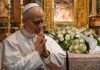




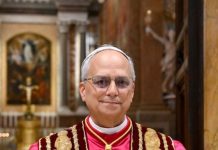







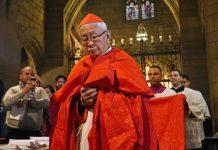
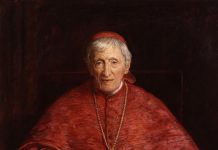
Vatican Secretary of State Cardinal Pietro Parolin visits war-torn Cabo Delgado, assuring suffering Christians of Pope Francis’s closeness amid ISIS-linked insurgency.
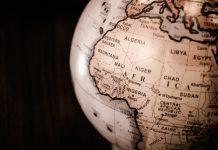
Newsroom (13/12/2025 Gaudium Press ) In a bold gesture of solidarity amid ongoing violence, Vatican Secretary of State Cardinal Pietro Parolin made a high-risk visit to Mozambique’s conflict-ridden Cabo Delgado province, where Islamist terrorism and natural disasters have inflicted profound suffering on local communities.
Speaking on December 8 at St. Paul Cathedral in Pemba during his December 5-10 pastoral visit to the southern African nation, Parolin assured victims that their “sufferings, fears and anxieties, and hopes are in the heart of Mother Church and have a special place in the heart of the Successor of Peter.”
“I have come to tell you all journeying in Cabo Delgado that you are not alone,” the cardinal declared. “The Holy Father and the entire Church, which is One and Universal, are with you.”
He paid tribute to the “heroic witnesses of faith” among local Catholics, including those who “remained faithful to Christ in these times of pain and strife” and others “killed without denying the name of Jesus.”
Mozambique, home to nearly 35 million people, is roughly evenly divided between Christians (47 percent) and Muslims. In the northern province of Cabo Delgado, however, Muslims form the majority at 60 percent. The region has been engulfed in turmoil since 2017, when a local militia known as al-Shabab—believed to have ties to the Islamic State—began exploiting grievances over poverty, land disputes, and job competition.
These tensions have been exacerbated by government partnerships with multinational energy firms exploring vast offshore natural gas reserves. Over eight years, the conflict has claimed at least 6,500 lives and displaced one million people.
The Church has borne a heavy toll. Bishop António Juliasse of Pemba reported that more than 300 Catholics have been killed since the violence erupted, including 34 in 2025 alone. Missions have been burned, and clergy and faithful targeted directly.
Johan Viljoen, director of the Denis Hurley Peace Institute of the Southern African Bishops’ Conference, described the evolving threat to Crux: “While the fighting that began in 2017 was initially disorganized, it has become an overtly ISIS-affiliated movement over the past three years. The church is under direct attack… it is a place where the church is being persecuted severely.”
During his visit, Parolin listened intently to survivors’ testimonies—of Christians who lost family members to terrorists, religious who continue evangelizing at great personal risk, and believers who refused to renounce their faith even facing death.
“Cardinal Parolin greeted the displaced one by one, shaking their hands and blessing their children,” Bishop Juliasse recounted in a message to the pontifical charity Aid to the Church in Need. “It was as if he wanted to embrace each and every one of them, and touch their deepest wounds, so as to participate in their suffering and their hope.”
Despite the hardship, observers note the remarkable vitality of Mozambique’s Catholic community. Viljoen highlighted flourishing vocations as evidence of deep faithfulness: the archdiocese of Nampula alone has 220 seminarians—a stark contrast to declining commitments in Europe and the United States.
This vibrancy, Viljoen argued, underscores the significance of Parolin’s journey, echoing Pope Francis’s frequent call to prioritize the “peripheries” and the marginalized. “Cabo Delgado is amongst the poorest people in Africa if you look at the Human Development Index, but it’s also one of the most vibrant, active churches that we have,” he said. “It’s a wonderful thing that Cardinal Parolin went there.”
Residents reported feeling encouraged and renewed in hope by the visit. Yet Viljoen expressed skepticism about the Church’s ability to alter the conflict’s root causes, pointing to powerful economic interests driven by oil, gas, and mineral reserves involving companies like Total and ExxonMobil.
“The economic vested interests are too large,” he told Crux. “Capitalist greed does not listen to our arguments about God, who is love, and about morality, and compassion… I don’t know how much headway the church can make in a situation like that.”
Parolin’s presence in one of Africa’s most perilous conflict zones nonetheless signaled unwavering papal accompaniment for a persecuted yet resilient local Church.
- Raju Hasmukh with files from Crux Now
Related Images: