











Cardinal Onaiyekan says Nigeria’s crises stem from selfishness and dishonesty, calling for integrity and compassion in leadership.
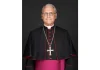
Newsroom (02/02/2026 Gaudium Press ) At 82, John Cardinal Onaiyekan has lived through every political curve of Nigeria’s evolution — from independence hopes to democratic disappointments. Yet, on the day marking his 82nd birthday, the Archbishop Emeritus of Abuja did not mince words about the country’s worsening condition. Nigeria’s deepening social, political, and economic turmoil, he declared, is not the work of fate nor external manipulation, but the deliberate consequence of human greed, dishonesty, and poor judgment.
“Our problems in the country are self-inflicted,” Cardinal Onaiyekan told ACI Africa in an interview. “They are self-inflicted because people are selfish, people are dishonest, and people are not wise.”
His words carried both sadness and a firm moral charge. The respected cleric lamented that Nigerians have lost a sense of shared humanity and collective responsibility — the moral glue that binds a society. The result, he said, is a nation fractured by inequality, insecurity, and mistrust.
“You can’t be happy alone,” Onaiyekan warned. “No amount of wealth can compensate for a society filled with anger, poverty, and despair.” True happiness, he argued, can only emerge when leaders and citizens alike see their fortunes as intertwined, not divided by greed or privilege.
Politics Without Purpose
The Cardinal’s disappointment extended to Nigeria’s political establishment. What once carried the promise of service, he said, has degenerated into a scramble for control and access to state resources. “Who is thinking about the people? Who is thinking about the poor? Who is thinking about the future?” he asked, his tone steeped in disbelief.
He described a political culture consumed by self-preservation rather than public duty, where elections reflect manipulation rather than democracy. Recalling the 2023 general elections, Cardinal Onaiyekan criticized what he called a public acceptance of rigging “as normal.” The irregularities, he said, were obvious, yet institutions charged with protecting democracy looked the other way.
“Everybody saw that there was rigging happening,” he said, accusing key state bodies of “pretending not to see what was evident.”
The Burden of Inequality
For Onaiyekan, Nigeria’s economy mirrors its politics: inequitable, disordered, and unjust. “It seems to be the order of the day now that people are working hard and getting very little,” he observed, reproaching a culture that rewards shortcuts over effort. He urged Nigerians who enjoy material comfort to “recognize God’s hand in their fortunes” and use that privilege to uplift those left behind.
His critique revealed more than economic frustration—it was a call for conscience. In a country where opportunity often favors the connected, the Cardinal framed generosity and fairness not merely as virtues but as duties required for survival.
Age, Faith, and Perspective
Reflecting on his own journey, the octogenarian prelate spoke with serenity and humor about mortality. “When I go to sleep, and I wake up in the morning, hey, here’s another day for me,” he said with a smile. “I’m not in a hurry to die. I will not kill myself. But I’m not afraid to go. My boarding pass is ready—the destination is paradise. Direct flight, non-stop.”
That blend of wit and wisdom also colored his counsel to fellow clergy. Cardinal Onaiyekan urged religious leaders to resist pride and self-promotion, reminding them that every gift is divine. Citing Saint Paul, he asked pointedly, “What is it that you have that has not been given to you?”
A Broken Electoral System
Turning his gaze to the electoral system, the Cardinal decried how political parties have narrowed Nigerians’ choices. “Our choice has been considerably limited by the fact that the political system leaves the choice of candidates in the hands of politicians,” he said. “At the end of the day, who is going to be the candidate? It’s all within the clique of politicians.”
He also criticized the vast sums spent on the Independent National Electoral Commission (INEC), questioning whether institutional change has matched the financial investment. “We have a new INEC chairman… Is there going to be any change? We have changed the INEC chairman. Have we changed the INEC system? That is the problem,” he lamented.
His concluding remark carried both warning and hope: “If we don’t do all that, we shall be suffering from our self-inflicted wounds.”
- Raju Hasmukh with files from ACI Africa
Related Images: