


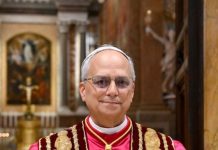







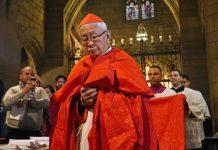

Cardinal Farrell, Prefect of the Dicastery for Laity, Family, and Life, framed the global rise in life expectancy as a divine gift rather than a societal burden
Newsroom (02/10/2025, Gaudium Press ) At the opening of the II International Congress on the Pastoral Care of the Elderly, held at the Jesuit Curia, Cardinal Kevin Joseph Farrell, Prefect of the Dicastery for Laity, Family, and Life, framed the global rise in life expectancy as a divine gift rather than a societal burden. Urging a shift in perspective, he called for “adequate pastoral responses” to harness the unique contributions of older adults in a rapidly changing world.
A “Sign of the Times”
Cardinal Farrell described the growing elderly population as a hallmark of the “change of era” unfolding globally. While society often views this demographic shift as an “emergency to manage,” the Church sees longevity as a “divine gift” that demands thoughtful pastoral care. “The extension of life is a sign we must read through the lens of faith,” Farrell emphasized, advocating for initiatives that value the elderly’s wisdom and experience.
The congress, themed around the 2020 event The Wealth of Years, builds on the Church’s commitment to addressing the pastoral needs of older adults. Farrell highlighted the necessity of “hands-on” engagement with the elderly’s daily realities—joys, hopes, and challenges—to craft a pastoral approach rooted in listening rather than top-down solutions.
Papal Focus on the Elderly
Farrell underscored Pope Francis’ longstanding attention to the elderly, citing his dedicated audiences, a catechesis series on old age described as “rich in human and spiritual wisdom,” and the establishment of the World Day for Grandparents and the Elderly. This focus echoes earlier papal teachings, including St. John Paul II’s 1982 call for a pastoral approach that embraces the “creative role” of older adults, later reinforced in his 1999 Letter to the Elderly and the 1998 document The Dignity of the Elderly and Their Mission in the Church and Society. Pope Benedict XVI furthered this vision, notably during his 2012 visit to the Viva gli Anziani community, where he declared, “The quality of a society is judged by how it treats its elderly. Those who make room for the elderly make room for life.”
The Elderly as the Church’s Future
Rooted in the Second Vatican Council’s vision of the Church as the “People of God on a journey,” Farrell emphasized the active role of the elderly in the Church’s mission. Drawing from the conciliar documents Lumen Gentium and Gaudium et Spes, he reaffirmed the baptismal dignity and shared responsibility of all believers, including older adults. Quoting Pope Francis from the first congress, he said, “The elderly are the future of the Church, not just its past. Their experience, rooted faith, and wisdom are an invaluable treasure for the entire People of God.”
A Global Demographic Shift
Farrell highlighted the global rise in life expectancy, noting that over one-fifth of Europe’s population is now over 65, with countries like Japan, Italy, and Germany seeing this group comprise a quarter of their citizens. This “widespread longevity” stems from improved welfare, but also from challenges like rural depopulation, migration, and economic and political crises that drive younger generations away. Even in Africa, traditionally a younger continent, the elderly are becoming a significant and stable presence.
Longevity as a New Opportunity
Interpreting these changes through the Gospel’s light, as urged by the Second Vatican Council, Farrell called the extended lifespan a “new opportunity.” More years, he said, offer greater time to embrace the Gospel with enthusiasm, enriching the entire community. He urged parishes to foster synodal, collaborative pastoral approaches that avoid “prepackaged solutions” and instead engage the elderly’s active participation. “Retirement is no longer a time of inactivity,” he noted, “but often a season rich with commitments and passions.”
The II International Congress on the Pastoral Care of the Elderly continues through this week, bringing together clergy, pastoral workers, and experts to explore how the Church can better accompany and empower older adults in their vital role within the global faith community.
- Raju Hasmukh with files from Vatican News
Related Images: