














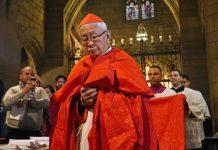

Cardinal Damasceno resigns from the controversial commissariat over the Heralds of the Gospel. What’s next for the Vatican investigation?
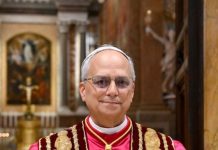
Editorial Staff (20/11/2025 Gaudium Press) – Sources have confirmed that His Eminence, Card. Raymundo Damasceno Assis has submitted his resignation from the post of Commissioner of the Heralds of the Gospel and of the Societies of Apostolic Life Virgo Flos Carmeli and Regina Virginum, a role entrusted to him in 2019 by the Dicastery for Institutes of Consecrated Life and Societies of Apostolic Life (DIVCSVA).
Given his advanced age (88) and the endless delay by the DIVCSVA (already 8 years of intervention), it is presumed that His Holiness Pope Leo XIV will accept the resignation. This Thursday, November 20, the Holy Father told Italian bishops that it is fitting for bishops to retire at 75 and to learn how to say farewell. Card. Damasceno has now chosen to bid farewell, summarily, to the fading commissariat in which he found himself. There was nothing more to be done. The Apostolic Visitation had already interviewed all members, and he, as commissioner, had on several occasions proposed ending the entire intervention of the Vatican dicastery.
The commissariat led by the cardinal has a long history, as recounted in the book The Commissariat of the Heralds of the Gospel: Chronicle of the Facts 2017–2025 – Punished Without Dialogue, Without Evidence, Without Defense, released a few weeks ago. The work has been generating quite a stir—and also silence. But some silences speak volumes.
The book simply clarifies the facts. It outlines numerous institutional damages, the gravest of which is arguably the vocational asphyxiation: the prevention of new members from entering and the blockage of diaconal and priestly ordinations imposed by Card. Braz de Aviz. There are also financial, moral, and spiritual damages of various kinds.
It is well known that the leadership of the Apostolic Visitation, which began in 2017, encouraged opponents of the Heralds to file civil lawsuits against the institution. These lawsuits came in torrents, in an articulated and orchestrated manner to defame the institution, as confirmed by the various pieces of evidence presented in the book. All more than 30 civil cases brought against the Heralds were resolved in the institution’s favor, according to the report prepared by the commissariat itself for the purpose of concluding the intervention.
The halls of the DIVCSVA remained largely inaccessible even to the Commissioner appointed by the congregation itself. As the book notes, The Commissariat of the Heralds of the Gospel, the commissioner himself was, in practice, “commissariated.” And the Heralds? Their letters are not even answered…
If the aforementioned book already raised many questions about what will become of the Heralds of the Gospel, the resignation of Card. Damasceno is not an answer—but a new Pandora’s box.
Above all, the great doubt that remains is: Did Card. Damasceno resign or was he “made to resign”?
The first hypothesis is plausible if we consider that the Cardinal Archbishop Emeritus of Aparecida had already made every attempt to bring the commissariat to an end and, having failed, opted for an extreme measure.
The second hypothesis is also credible, because perhaps it no longer suited the congregation to keep the commissariat in limbo. Just like during the Apostolic Visitation period (2017–2018), this current commissariat did not find anything serious to discredit the Heralds. Will a new wave of interventions now begin, with repeated violations of canon law?
What is certain is that Pope Leo XIV is already aware of the Kafkaesque process faced by the Heralds of the Gospel, to use the expression of Andrea Gagliarducci (see article previously published by the author). Once the resignation is accepted—as all signs indicate—what will happen next in this process? Will we continue reading new chapters of Kafka? Or will there finally be an end to this never-ending drama? The problem with continuing Kafka’s fiction is that it ends very poorly: the accused is executed without ever discovering the reason for his condemnation… Could this be the dicastery’s actual goal?
Another possible scenario is this: the Heralds have already proven their innocence in every civil and canonical court. Will new accusations now be raised to justify a fresh intervention? Will they go back to the same old spin? Cicero already knew this tactic: Alios vidi ventos alias prospexi animo procellas — “I have seen other winds, I have faced with the same spirit other storms.” (In L. Calpurnium Pisonem Oratio, n. IX)
If nothing could be proven by facts, will the process now move to the realm of ideas? In some ideologically inclined ecclesiastical circles, one already hears that the real problem with the Heralds is their “mentality.” If that is the case, are we now moving into another work of fiction—namely George Orwell’s 1984, where the idea of a “thought police” was imagined?
In this vein, the underlying question remains: Will the dicastery follow an ecclesiology based on the Second Vatican Council, which states that charisms must be “received with gratitude and consolation, as they are very suited and useful to the needs of the Church”? (Lumen Gentium, 12) Or will it follow the logic of autocratic regimes (as Orwell depicted) and go for all or nothing?
In a recent interview, Sr. Simona Brambilla, the current prefect of the DIVCSVA, commented that her dicastery has “a great activity of listening.” Very well—will it also listen to the growing segment of public opinion asking for justice in “the case of the Heralds of the Gospel,” or will it only heed the siren songs of detractors?
If nothing has been found until now, are we moving into a new phase of accusations—like in Aesop’s fable of the Wolf and the Lamb, where the lamb is accused of all sorts of crimes—even those that are impossible—just so the wolf can attack the defenseless creature?
We do not know which storyline the dicastery intends to apply: Kafka, Orwell, Homer’s Sirens, Aesop’s fables, or some other tale not yet revealed…
One thing is certain: Pope Leo XIV now has a great opportunity to correct the course of this sorrowful story, which harms not only the Heralds but the entire Church: “If one member suffers, all suffer with it” (1 Cor 12:26).
Until now, the narrative of the intervention into the Heralds has surpassed fiction. From this point on, the Holy Father has an unprecedented opportunity to turn it into part of the Church’s most beautiful history—namely, the heroism of great decisions that can change the course of events. And that is not built with ever more elaborate narratives, but by confirming his brethren (Lk 22:32), as Peter did, whose successor in charity and truth is Leo XIV.
By Luis Fernando Ribeiro
Compiled by Gus Kralj
Related Images: