















Canadian bishops, led by new president Bishop Pierre Goudreault, address secularism, euthanasia, AI ethics, and Indigenous reconciliation at annual plenary.
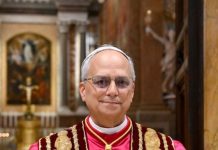
Newsroom (30/09/2025, Gaudium Press ) As the Canadian Conference of Catholic Bishops (CCCB) concluded its annual plenary in Montreal, newly elected president Bishop Pierre Goudreault outlined the Church’s approach to pressing cultural and political issues facing Canadians. The 62-year-old bishop of Sainte-Anne-de-la-Pocatière, elected during the plenary held from Sept. 22 to Sept. 26, emphasized collaboration, dialogue, and advocacy in addressing secularism, euthanasia, artificial intelligence, and Indigenous reconciliation.
Navigating Quebec’s Secularism Debate
Responding to questions about Quebec’s efforts to restrict prayer in public spaces, Goudreault clarified the bishops’ stance on laïcité, the province’s model of church-state separation. “Bishops are not against laïcité, especially in Quebec,” he said. “The state is secular, but society is pluralist. Faith communities have the right to speak, contribute to the common good, and bring reflection.” He underscored the bishops’ commitment to working collaboratively with society to uphold this pluralistic vision.
Defending Charitable Status for Faith-Based Organizations
The CCCB is also engaging with federal policies threatening pro-life and faith-driven non-profits. In March, the bishops expressed concern to Finance Minister François-Philippe Champagne over recommendations 429 and 430 in the Standing Committee of Finance’s Pre-Budget Consultations report. These proposals suggest amending the Income Tax Act to revoke the charitable status of organizations promoting pro-life views or the “advancement of religion.”
“We are sharing these challenges with our Christian partners,” Goudreault said. “It’s important for us as Catholic bishops to reflect with other churches and consider concrete actions. We’ve made statements already, and we will continue to take this seriously.” The bishops aim to unite with other faith groups to protect the legal standing of these organizations.
Advocating for Palliative Care Amid Euthanasia Expansion
The expansion of medical assistance in dying (MAiD) into Catholic health-care facilities remains a significant concern. Goudreault acknowledged the unease among Catholics and reaffirmed the bishops’ commitment to life-affirming alternatives. “Yes, Catholics are concerned, and so are the bishops,” he said. “That’s why we’ve made statements on this issue. In our dioceses, we are working hard to provide information about palliative care, which we see as the true alternative. Palliative care offers dignity and even beautiful moments at the last stage of life.”
Strengthening Protections for Minors and Vulnerable Persons
Goudreault highlighted ongoing efforts to enhance safeguards for minors and vulnerable persons, building on the CCCB’s 2018 report, Protecting Minors from Sexual Abuse. “Bishops have taken many steps—protocols, formation, policies,” he noted during his plenary remarks. “It is important to update them regularly. That’s why we are returning to this work now.” The CCCB plans to develop new pastoral guidance documents this year to further these protections.
Ethical Considerations for Artificial Intelligence
The bishops also explored the ethical implications of artificial intelligence (AI), guided by insights from Fr. Philip Larrey, a Boston College philosophy professor and AI expert. While no specific initiatives were announced, Goudreault emphasized a balanced approach. “There’s great potential, especially in health care, but also real concerns,” he said. “AI must never replace human intelligence and human relationships. Discernment is key in how we use it.”
Advancing Indigenous Reconciliation
Ahead of the National Day for Truth and Reconciliation on Sept. 30, Goudreault reported that the Indigenous Reconciliation Fund has raised $21 million of its $30 million goal. These funds have supported 300 projects inspired by elders and residential school survivors, reflecting the Church’s commitment to healing and reconciliation.
New CCCB Leadership
The plenary also saw the election of the CCCB’s new executive leadership. Bishop Pierre Goudreault, ordained a priest in 1991 and bishop since 2018, succeeds Calgary Bishop William McGrattan as president. Archbishop Donald Bolen of Regina, a bishop since 2009, was elected vice president. Co-treasurers include Saskatoon Bishop Mark Hagemoen (English Sector) and Saint-Hyacinthe Bishop Christian Rodembourg (French Sector).
The Permanent Council welcomed new members, including St. John’s Archbishop Peter Hundt, Valleyfield Bishop Alain Faubert, Peterborough Bishop Daniel Miehm, and Winnipeg Archbishop Murray Chatlain. Bishops Guy Desrochers and Pierre-Olivier Tremblay were re-elected as French Sector representatives. Ex officio members include Cardinal Francis Leo (Toronto), Cardinal Gérald Lacroix (Quebec City), Archbishop Christian Lépine (Montreal), and Archbishop Lawrence Huculak (Winnipeg, Ukrainian Catholics).
As the CCCB moves forward, Goudreault’s leadership signals a focus on dialogue, ethical discernment, and advocacy for the Church’s role in a rapidly changing Canadian society.
- Raju Hasmukh with files from Catholic Register
Related Images: