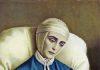



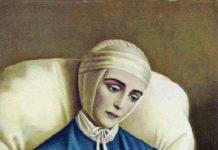




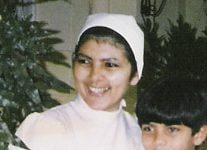



Blessed Maria Romero Meneses was a wealthy, aristocratic young Nicaraguan woman who renounced a life of luxury and comfort.
Newsroom (07/24/2025, Gaudium Press) Blessed Maria Romero Meneses, one of the Blessed whom the Church venerates, was a young, aristocratic and wealthy Nicaraguan who consciously and voluntarily renounced a life of luxury and comfort. She was surrounded by flatterers and interested parties, but faced the arduous and tiring apostolate of a daughter of Don Bosco, and who died exhausted from her apostolic labours at the age of 75.
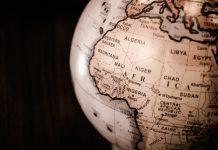
She was from the city of Granada in Nicaragua. She probably spent her childhood and adolescence in a very conservative family environment, but with a view to success in the world, as was the case with all the distinguished families of Managua, León and Granada in the Nicaragua of the 1920’s and 1930’s.
They were the offspring of families of landowners and very rich exporters and importers, closer to commercial Olympus than to Heaven, but with a certain fear of God that created the conditions for virtue. The future to which Mother Maria Romero turned her back was no small thing.
Granada lies on the shores of the great Lake Nicaragua and is a very old and charming city, one of the oldest in Spanish America, dating back to the conquest, around 1522. It was there that Maria was born in January 1902. Very early in her life she came to know the work of the Salesian Sisters and studied with them, awakening very soon her religious vocation, more given to social service and formation than to contemplation properly speaking, although who could say that the practical-active life is a distraction from walking in the highest loving contemplations with God?
When she entered secondary school she almost died of a serious rheumatic illness, but she was cured. She became a Daughter of Mary Help of Christians and says that it was one of the happiest days of her life: ‘I felt like I was in Heaven’.
When she was in the fifth year of primary school, she made her vow of chastity in front of the school director, Fr. Bottari, who was also her confessor.
Christ speaks to her – Handmaid of Mary
While in the Novitiate, after a meditation on the Gospel, the mistress Sr. Maria Zanatta said to them: ‘Go to the tabernacle and ask the Lord, who am I to You?’ and Sr. Maria heard Our Lord answer her: ‘You are the favourite of My Mother and the darling of My Father’, to which she replied ‘To You, Lord, I am Maria Romero, Your beloved’.
She was sent to San José, Costa Rica, where she made her profession of vows. On arriving near Mary Help of Christians she always said to her: ‘Here I am Jesus’.
In 1935 she consecrated herself as a handmaid of Jesus by the hands of Mary, according to the method of St. Louis Marie Grignion de Montfort. She no longer belonged to herself, but to Our Lady, and so the Mother of Heaven was everything to her, as can be seen in her life, full of graces, help and miracles.
She was Nicaraguan but was sanctified for 46 years in Costa Rica. She will be a Saint of the whole Isthmus, so deeply marked by the presence of the Church, so spoiled by Providence, giving it a very rich and fine aristocracy, but it fell short of the call to elevate the region to great panoramas and did not really fulfil the role entrusted to its elites.
The Blessed is more than vindicated by her exemplary life and her work, an unfinished symphony, because even today the Casa de Maria Auxiliadora for precarious people of all ages and the Casa Maín, dedicated to the rehabilitation of street women, are still going strong.
Our Lady always helped her in her evangelizing needs.
In 1967, she heard that the neighbour wanted to sell his corner house. Sr. Maria, having no money, asked her Superior for permission to buy… but how? ‘Mary Help of Christians will help us.’
She talked to the owner and agreed on the price, which gaver them three months to pay in cash. She arranged a loan with a friend at the bank, but everything indicated that it would not be approved because she had no financial support. She made an application in the name of María Auxiliadora as the applicant and against all expectations it was approved and she was able to pay and buy the property. She ended up paying off the loan even before the due date because she received unexpected help, because she asked and trusted in the One who is the Queen of Angels and of men.
On another occasion a Mercedes Benz appeared in front of Our Lady’s house, and an important man invited her to get in because a friend of his was in very bad health, so that she could go and see him and save him. The sick man agreed, she prayed, the miracle happened, and the benefactor gave her a large donation that she urgently needed to pay for one of her works. When this was learned, she was congratulated and she said: “Not I, the Queen!”
She introduced more than 10,000 images of the Sacred Heart and Mary Help of Christians into homes.
At the same time as she was developing her catechetical formation, she introduced the images of the Sacred Heart of Jesus and Mary Help of Christians into homes with young ladies who helped her, and by the end of 1951 she had placed 10,873 pictures of Mary Help of Christians and 11,490 of the Sacred Heart of Jesus. What a beautiful missionary work! She always said: ‘Give me souls, Lord, and take the rest away from me’, which was a phrase of St. John Bosco himself.
Miraculous Water – Many miracles
One day she asked Our Lady to perform miracles for her. She had a well dug from which pure and drinkable water gushed forth, and the people drank it and began to be cured; to this day the devotees still drink it and it does them good. She performed numerous miracles, and witnesses claim to have seen her in two places at the same time, on several occasions, thus confirming the gift called bilocation.
For many who knew her closely (she died in July 1977) she is one of the noblest female versions of the good Don Bosco. It was also Blessed John Paul II who, on 14 April 2002, recognized her first merits, which today take her to the altars so that the number of examples and role models in our Latin America may increase, if we know how to present them to the new generations of the continent of the future.
Compiled by Sandra Chisholm
Related Images: