








The Belarusian government is accused of systematically targeting and imprisoning Catholic priests to use as political hostages.
Newsroom (18/09/2025, Gaudium Press ) Human rights campaigners are accusing the Belarusian government of systematically targeting and imprisoning Catholic priests to use as political “hostages,” a charge that gained new urgency with the recent detention of a Polish Carmelite monk on espionage allegations.
The allegations are detailed in firsthand testimony from a newly freed political prisoner and supported by lay Catholic leaders, who assert that the regime of President Alexander Lukashenko is fabricating charges against clergy to pressure the Vatican and escalate tensions with neighboring Poland.
“The state sees Poland and the Catholic Church as enemies. … This is why they’re staging these set-ups,” said Andrei Krylov, who was released on Sept. 11 after serving a five-year term for “organizing mass riots.” He spoke in Vilnius after being freed alongside 51 others in a prisoner release.
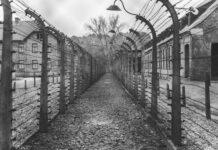
Krylov, who was imprisoned in the Babruisk penal colony, provided a detailed account of the treatment of Father Henrykh Akalatovich, an elderly and unwell parish rector from Valožyn who is serving an 11-year sentence for “high treason.” According to Krylov, Father Akalatovich resisted pressure from the KGB to falsely testify against other clergy and refused to request a pardon, believing himself to be a “hostage and prisoner of war” because of his faith.
“The Belarus regime is a criminal entity, and the only pressure it fears is media publicity,” Krylov stated. “We need to get this across to the world, we need to get this across to the Vatican, so they can do something, free people.”
The situation escalated on Sept. 4 with the detention of Father Grzegorz Gawel, a 27-year-old Polish Carmelite. Belarusian state television broadcast footage it claimed showed “irrefutable evidence” of his spying activities, alleging he was collecting information on a joint Russian-Belarusian military exercise for Polish intelligence. The Polish government has condemned the arrest as an “evident provocation.”
Appeals to the Vatican and a Pattern of Persecution
The arrests are part of a broader crackdown on religious freedom in Belarus. Dozens of Catholic, Orthodox, and Protestant clergy have faced arrest under a restrictive 2023 law that prohibits religious activities deemed to threaten national “sovereignty” and “civil harmony.”
Among them is Oblate Father Andrzej Juchniewicz, a senior Catholic official who was sentenced in a closed trial to 13 years after his initial charge of “subversive activities” was changed to “criminal offenses” involving sex with minors.
There is a growing plea from Belarusian Catholics for a more vocal show of support from the Vatican. While acknowledging the Holy See’s diplomatic efforts, many feel a profound lack of public solidarity.
“There’s been much diplomatic balancing… but simple signs of closeness have been lacking,” said Artiom Tkaczuk, a Catholic social worker now exiled in Poland. “We can’t ignore those waiting with pain and hope for a single word of support.”
Natallia Vasilevich, coordinator of the Christian Vision organization, echoed that sentiment, stating that priests are being held to “escalate tensions” with Poland and to pressure the Vatican into silence on human rights abuses.
“Catholic priests are being used as hostages for use in talks with the West,” Vasilevich told OSV News. “They’ll only be freed if this benefits the regime, such as by securing the lifting of sanctions.”
She asserted that the Vatican possesses the instruments to pressure the Minsk regime but must choose to use them, adding that “relentless negative publicity” is crucial for the prisoners’ cause.
The Vatican’s newly accredited apostolic nuncio to Belarus, Archbishop Ignazio Ceffalia, who presented his credentials to Lukashenko on Sept. 11, is aware of his “difficult mission,” according to Vasilevich, and has so far avoided local clergy to prevent “attempted provocations.”
The plight of the imprisoned priests is set against the backdrop of a shrinking space for civil society in Belarus. There are currently 1,184 individuals recognized as political prisoners by human rights groups, including 2022 Nobel Peace Prize laureate Ales Bialiatski.
For those inside the penal colonies, a brutal “caste system” prevails, Tkaczuk explained. Priests like Father Juchniewicz are given the “lowest status,” forced into humiliating labor, and isolated from other inmates.
As the Lukashenko regime continues its crackdown, the faithful inside Belarus cling to their connection to the global Church. “They need to know they can count on the church abroad to stand with them, show solidarity and not forget about their problems,” Tkaczuk said.
- Raju Hasmukh with files from OSV News
Related Images: