

















With the 2025 Jubilee ending, Pope Leo XIV turns the Church’s gaze to a monumental 2033 celebration marking Christ’s death and resurrection.
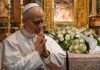
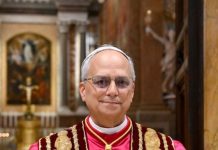
Newsroom (06/01/2026 Gaudium Press ) The morning light of January 6 spilled across the cobblestones of St. Peter’s Square as Pope Leo XIV pressed his hands against the bronze Holy Door and swung it shut, marking the conclusion of the 2025 Jubilee Year. The ceremonial act, held on the feast of the Epiphany, brought to a close more than a year of celebration in the heart of Rome — but also marked the beginning of anticipation for the next great milestone in Catholic history.
Though jubilees traditionally occur every 25 years, the next will come just eight years from now. In 2033, the Church will commemorate two millennia since the death and resurrection of Jesus Christ — a Jubilee unlike any other, designated by the Vatican as the Holy Year of the Redemption. For this occasion, Pope Leo has called on the faithful not only to gather in Rome but also to journey to the places where Christ once walked.
The vision for this coming Jubilee took shape months earlier, when Pope Leo addressed Christian leaders in Istanbul on November 29, during his trip to Turkey. The meeting coincided with the anniversary of the Council of Nicaea, the fourth-century gathering that defined much of the early Church’s doctrine. In his remarks, the pope reflected on that legacy — its theological depth, its pursuit of unity, its enduring relevance — before turning to what lies ahead.
According to the Holy See Press Office, the Holy Father concluded his address with an invitation that reached beyond the moment: a call “to travel together on the spiritual journey that leads to the Jubilee of the Redemption in 2033, with the prospect of a return to Jerusalem.” For the pontiff, the journey to the Holy Land is more than a pilgrimage; it is, in his words, an act of communion, a literal and spiritual tracing of the path Christ himself once took.
Pope Leo described the Holy Land as the place “where the faithful can celebrate in the Cenacle, place of the Last Supper of Jesus with his disciples, where he washed their feet, and the place of Pentecost.” It is there, he said, that believers may rediscover the roots of their faith and renew the quest for Christian unity — a cause captured by his episcopal motto: In illo uno unum — “In the One, one.”
That vision closes a Jubilee already defined by its theme of hope. The 2025 Holy Year began on Christmas Eve 2024, when Pope Francis opened the Holy Door at St. Peter’s Basilica, inaugurating a season of spiritual renewal under the banner “Pilgrims of Hope.” Over twelve months, nearly 30 million pilgrims poured into the Eternal City. They attended Masses, processions, and special jubilees for families, the sick, the elderly, children, and youth. From candlelight vigils to confessions heard in dozens of languages, Rome became a living testament to the Church’s global reach and enduring vitality.
As the Holy Door now closes, the memory of those gatherings lingers in the hushed grandeur of the basilica — a reminder that jubilee, in the Catholic tradition, is both an arrival and a departure. Pope Leo XIV’s gaze, already fixed on 2033, suggests that the Church’s next pilgrimage will stretch far beyond Rome’s sacred stones, carrying the faithful to the heart of Jerusalem and to the origins of redemption itself.
- Raju Hasmukh with files from CNA
Related Images: