



















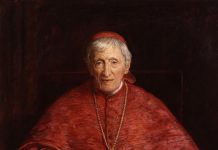

From the Reformation onwards, the state used the new Anglican Church as an organ of control, while Anglican bishops supported the persecution of Catholics
Newsroom (03/10/2025, Gaudium Press ) On the 175th anniversary of Pope Pius IX’s 1850 papal bull Universalis Ecclesiae, which restored a Catholic hierarchy in England after nearly three centuries of suppression, some faithful are turning their gaze to an unresolved legacy: the state’s brutal anti-Catholic measures from the Reformation onward. While the milestone evokes pride in resilience, it has also reignited debates over whether the nation—and the Church of England—owes a formal reckoning for the human toll.
“From the Reformation onwards, the state used the new Anglican Church as an organ of control, while Anglican bishops supported the persecution of Catholics,” said Timothy Guile, chairman of England’s Catholic History Association, in an interview with OSV News. “There’s never been any apology for this, nor any gesture of regret towards families who risked their lives helping fugitive priests.”
The anniversary was marked across England’s Catholic parishes with a pastoral letter from Cardinal Vincent Nichols, president of the Catholic Bishops’ Conference of England and Wales. Read aloud during Masses, the letter hailed Universalis Ecclesiae as a turning point, allowing Catholic life to “slowly emerge from centuries of opposition and suppression” and enabling believers to “regain a recognized place in public and political life.”
Catholics, Nichols wrote, should take pride in forebears who preserved the faith “with courage and at great personal cost,” and give thanks for how conditions have “changed beyond recognition.” Yet Guile, a historian specializing in the era, cautioned that the past’s scars linger. “Glaring economic and social disparities” between Catholic and Anglican communities persist, he said, rooted in discriminatory laws that stripped families of land, wealth and status.
A Legacy of Coercion and Bloodshed
The restoration under Archbishop Nicholas Wiseman—England’s first cardinal since the 16th century—capped a grim chapter of repression that began with King Henry VIII’s 1534 schism from Rome. What followed were the Penal Laws: Acts of Uniformity in the 1550s mandating Anglican worship under threat of fines or imprisonment; death penalties for priests celebrating Mass; and the 1593 statute confining Catholics to within five miles of home.
A 1698 Popery Act dangled bounties for informants and barred Catholics from owning or inheriting land, while crushing recusancy fines—levied for skipping Anglican services—doubled as a royal revenue stream, forcing many estates into foreclosure. Relief came piecemeal: the 1778 and 1791 Catholic Relief Acts eased some burdens, and the 1829 Catholic Emancipation Act unlocked universities, professions and Parliament. Full recusancy repeal waited until 1888, and a 1701 ban on Catholic royal marriages endured until 2013.
These measures, Guile noted, were enforced with Anglican complicity. Bishops interrogated and condemned priests, led raids on Catholic homes and stoked prejudice from the pulpit. “To claim this was all done to protect against subversion and foreign invasion is plainly unjust and wrong,” he said. The human ledger is stark: Recusancy Rolls document trials through 1835, while “priest holes”—secret chambers in Catholic manors—stand as grim relics of the hunt.
At Stonyhurst College in Lancashire, a martyrs’ museum chronicles the era’s ferocity. Twenty-three alumni were executed between 1610 and 1680; three joined the 40 English and Welsh Catholics canonized by Pope Paul VI in 1970. Hundreds more await martyrdom recognition, their stories intertwined with unquantified losses in property and legacy.
The 1605 Gunpowder Plot, a botched Catholic uprising against King James I, only hardened the clampdown, embedding anti-Catholic fervor in national lore.
Anglican Reflections: Reparations as a Moral Imperative
Even within Anglican circles, the weight of history prompts introspection. A senior church administrator, speaking anonymously to OSV News, pointed to his denomination’s recent pledge: drawing from a £10 billion ($13.5 billion) investment fund, the Church of England committed to reparations for its ties to the 18th-century slave trade.
He extended the logic to Catholicism. “Both the Crown and official church were complicit in coercion and judicial murder,” the administrator said. “While claims for legal redress would be hard to prove, some kind of atonement is clearly a moral duty, given that these past iniquities are still having tangible effects.”
Britain’s current human rights framework, he added, would bar future abuses—a safeguard absent in eras past. Still, recompense is due: perhaps through asset-sharing or deepened ecumenical ties to safeguard Christianity amid secular pressures. “These enormous historic injustices have simply never been addressed and have left Catholics visibly poor and marginalized alongside their Anglican neighbors,” he said. “If it’s argued that the impact of slavery is still felt in parts of today’s world, the same can be said of anti-Catholic measures, which affected social attitudes and economic structures up to modern times.”
Today, the British monarch remains the Church of England’s “supreme governor,” enshrined in oaths upholding Protestant privileges—a constitutional echo of the old order. The brutality of those laws, meanwhile, has faded into footnotes.
Bridging the Divide: From Regret to Recognition
Guile sees hurdles to acknowledgment: vestiges of anti-Catholic bias, but also Catholic reticence. “Sometimes you have to be assertive, and ready to expect a simple public expression of regret and sorrow for past misdeeds,” he urged.
As England honors its Catholic resurgence, the question lingers: Can a gesture of contrition—be it an apology, memorial or shared stewardship—finally lay these ghosts to rest? For families who hid priests in attics or forfeited fortunes for faith, the hour may be overdue.
- Raju Hasmukh with files from OSV News
Related Images: