


















Archaeologists have unearthed a 2,000-year-old settlement in Egypt’s Kharga Oasis, shedding new light on the region’s pivotal role in the transition from paganism to Christianity.
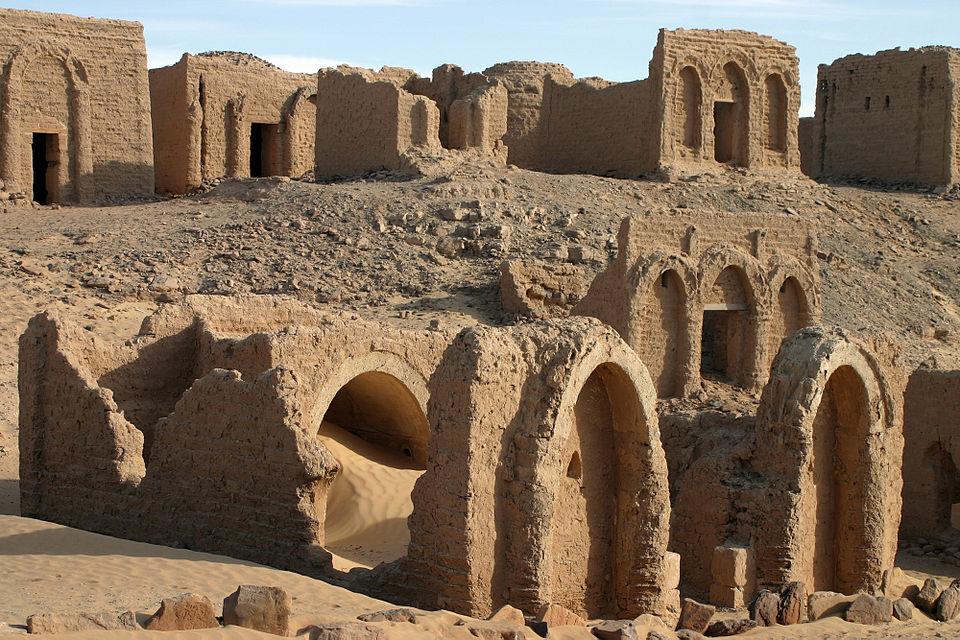
Newsroom (06/08/2025 Gaudium Press) Archaeologists have unearthed a 2,000-year-old settlement in Egypt’s Kharga Oasis, shedding new light on the region’s pivotal role in the transition from paganism to Christianity. The discovery, located in the Bagawat necropolis behind the Hibis Temple, spans from the 3rd century BCE to the early Coptic period between the 3rd and 7th centuries CE, according to Egypt’s Ministry of Tourism and Antiquities.
The settlement, described as a self-sustaining desert community, includes mud-brick houses, tombs, two churches, wall paintings, large pottery jars for grain storage, cooking ovens, pottery and glass fragments, stone pieces, and organized burial spaces. The findings highlight the wealth and diversity of ancient Egyptian civilization during a transformative historical period, said Sherif Fathy, Egypt’s minister of Tourism and Antiquities.
“This discovery underscores the Western Desert oases as vibrant centers of religious and social life across multiple eras,” said Mohamed Ismail Khaled, director of the archaeological mission.
A Window into Early Christian Life
The Bagawat necropolis, home to 263 standing structures, offers a vivid snapshot of a community paused in time. The larger of the two churches follows a basilica plan, featuring a central nave, side aisles, square columns, and a hall, suggesting the community’s prominence. The smaller, rectangular church bears Coptic texts on its interior walls, while a mural depicting Jesus healing a sick person adorns one of its surfaces. Other chapel domes display scenes from the Torah, reflecting the region’s religious diversity.
Thousands of inscriptions in Greek, Latin, Coptic, and Arabic, spanning centuries, further illustrate the cultural and linguistic richness of the settlement. Streets and standing walls, alongside nearby Ain Saaf residential structures, reveal a well-organized community. Communal grain jars, domestic ovens, and burial spaces provide insight into how early Christians adapted to the harsh desert environment.
Strategic Hub of Ancient Trade
Located in what is now the capital of the New Valley Governorate, Al-Kharga was a key node on major caravan routes, including the Darb al-Arbaeen to Darfur and tracks connecting to Abydos, Luxor, Esna, and Dakhla. Fortified sites such as Qala’at al-Lanja, al-Munira, and Douche, alongside sandstone temples like Hibis, al-Ghawita, al-Nadura, Zayan, and Douche, attest to the region’s continuous occupation.
The Hibis Temple, covering 798 square meters, was constructed during the reign of Persian king Darius I between 510 and 490 BCE, with decorations added until 69 CE. Some scholars suggest its foundations may date back to the Middle Kingdom, further emphasizing the site’s historical depth.
A Legacy Preserved in Sand
The discoveries at Kharga Oasis offer a rare glimpse into the interplay of religion, trade, and daily life in Egypt’s Western Desert. From its pagan origins to its Christian evolution, the settlement reflects the resilience and adaptability of its inhabitants. As excavations continue, archaeologists hope to uncover further evidence of how this remote community thrived amid shifting cultural and religious landscapes.
- Raju Hasmukh with files from Jerusalem Post
Related Images: