















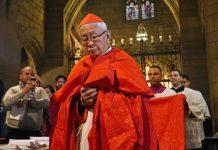

Bishops from across Africa convened under the theme “Christ, Source of Hope, Reconciliation, and Peace” for the 20th SECAM Plenary Assembly.
Newsroom (05/08/2025 Gaudium Press ) During this week’s Friday session, Bishops reflected on the planned 25-year journey from 2025 to 2050. They noted that the Church in Africa has asked itself three key questions: “Where are we today?”, “Where do we want to be in twenty-five years?”, and “How do we reach our destination?” To answer these, SECAM engaged in extensive consultation with all African episcopal conferences and select theologians. The outcomes are documented in ‘The Vision of the Church-Family of God in Africa for the Next 25 Years (2025-2050).’
The assembly resolved to commence implementing this strategic roadmap immediately, aiming for a Church rooted in the desire “to walk together, with courage, conviction, and communion.”
Observers and some of the Bishops described SECAM’s initiative of a 25-year vision for the Church in Africa as a bold and courageous move—comparable perhaps to the African Church’s self-description as a “family of God.” This vision traces its roots back to the African Synod held in Rome in 1994, where Bishops proposed the model of the ‘Church in Africa as a family of God.’ This vision emphasised the values of care, solidarity, ubuntu and close relationships prevalent in African society. Pope Saint John Paul II later endorsed this vision in his post-synodal apostolic exhortation, Ecclesia in Africa.
In a significant moment for the Catholic Church in Africa, bishops gathered at the recent 20th SECAM Plenary Assembly to address the pastoral challenges posed by polygamy, a practice deeply rooted in some African cultural and economic contexts. The discussions, held on Friday afternoon, were led by prominent African prelates, including Archbishop Andrew Nkea of Bamenda, Cameroon, and Cardinal Fridolin Ambongo of Kinshasa, Democratic Republic of Congo. The bishops took pains to correct media reports that falsely suggested they were advocating for the Church to recognize polygamous unions or amend its teaching on the Sacrament of Marriage.
The Catholic Church’s position, as reaffirmed by the assembly, remains steadfast: marriage is an indissoluble, exclusive, and faithful union between one man and one woman, ordained by God and elevated to a sacrament. “Any claim that we are seeking to change this teaching is simply untrue,” Cardinal Ambongo declared, addressing the misinformation that had circulated in some outlets. Instead, the Synod’s focus was squarely on how the Church can provide meaningful pastoral accompaniment to individuals already in polygamous unions, whether they are baptized Catholics or non-baptized individuals discerning a path toward the faith.
Cultural and Economic Complexities
Polygamy, while at odds with Christian teaching, remains a reality in parts of Africa, often tied to cultural traditions, economic survival, and social structures. The bishops acknowledged that simply demanding the dissolution of such unions is not always feasible, particularly for women and children who may face destitution or social ostracism as a result. “In many cases, separation is not a straightforward solution,” Archbishop Nkea explained. “We are dealing with human beings, with families, and with deeply entrenched societal norms. The Church must respond with compassion, not condemnation.”
This nuanced approach reflects the Synod’s broader theme of inclusion, a cornerstone of Pope Francis’ vision for a synodal Church that listens and walks with all its members. The bishops emphasized that no one should feel excluded from the Church’s embrace, even those whose circumstances do not align with its teachings.
A New Pastoral Document
A key outcome of the October 2024 Synod was the development of a comprehensive document designed to guide pastoral care for those in polygamous unions. Drafted with input from African theologians and bishops, the document also benefited from the expertise of the Dicastery for the Doctrine of the Faith, which offered suggestions to ensure theological clarity. The result is a framework that balances fidelity to Church doctrine with practical strategies for pastoral outreach.
The document addresses a range of scenarios, from supporting Catholics in polygamous unions who seek to regularize their situation to accompanying non-baptized individuals interested in joining the Church. It emphasizes discernment, dialogue, and gradual steps toward aligning with Christian teachings, while prioritizing the dignity and well-being of all involved, especially vulnerable women and children.
- Raju Hasmukh with files from Vatican News
Related Images: