










Ukrainian Catholic bishops in US: St. Philip’s Fast invites silence and prayer so Christ’s healing hope can take root in a wounded world ravaged by war and hidden grief.
Newsroom (20/11/2025 Gaudium Press ) As Ukrainian Greek Catholics in the United States and around the world began the annual St. Philip’s Fast on Nov. 15, the nation’s Ukrainian Catholic bishops released a pastoral letter declaring that “even in our anguish, hope can take root and healing can begin anew” through Jesus Christ.
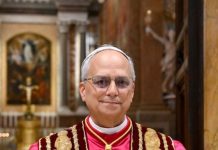
In the message dated Nov. 14, Metropolitan Borys A. Gudziak of the Archeparchy of Philadelphia and his brother bishops described the 40-day Nativity Fast — observed by Eastern Catholics and Orthodox Christians worldwide — as a season to contemplate the mystery of a God who “holds the universe in His hand” yet chose to become “a vulnerable, defenseless child.”
Also known as the Nativity Fast, the observance traces its formal institution to the Council of Constantinople in 1166. It begins the day after the Eastern-rite feast of St. Philip (Nov. 14) and concludes on Christmas Eve, Dec. 24.
Traditional disciplines include strict abstinence from meat on Mondays, Wednesdays, and Fridays, with lighter abstinence on Tuesdays and Thursdays. Many faithful intensify the fast in the final days before Christmas. Though less rigorous than the Great Lent before Pascha (Easter), the St. Philip’s Fast aims to spiritually prepare believers for the joy of the Incarnation.
The bishops’ letter draws stark parallels between the broken world into which Christ was born and today’s realities.
“The Gospels present vibrant images and words that reveal the brokenness of the world into which Christ was born: Roman occupation and oppression, political machinations that lead to the slaughter of the Innocents, forced migration, and the lack of shelter even for a pregnant mother,” the prelates wrote.
Yet, they continued, “God enters into this world of suffering to bring healing and salvation. Born in a stable, soon to become a refugee, Christ identifies with every wound, every scourge, every form of human brokenness.”
The message carries particular resonance as Russia’s full-scale invasion of Ukraine approaches its fourth winter, with aggression the bishops noted actually began in 2014.
“Living through the fourth winter of a barbaric aggression, Ukrainians, members of our Church, bear witness to the profound woundedness of humanity — indeed, they’re experiencing it firsthand,” the bishops wrote. “The horrors of destruction, loss, and displacement leave scars on the land, on the bodies of soldiers and civilians, and on the hearts of tens of millions of innocents.”
At the same time, they acknowledged that suffering is not confined to the war zone.
“Those of us who live far from immediate suffering carry our own burdens,” they said. “We feel the weight of separation, fatigue, and quiet loneliness. We bear hidden grief and carry profound wounds.”
Coinciding with the Catholic Church’s 2025 Jubilee Year of Hope, the fast becomes, in the bishops’ words, an invitation “to trust in God’s promises amid personal and global turbulence and uncertainty.”
They stressed that Christian hope is not abstract but incarnational: “In Christ it takes on flesh. It is made visible to us at Christmas.”
To encounter that hope, the bishops urged the faithful to embrace silence and intentional detachment during the fast.
“We are encouraged to fast not only from food but, importantly in our day, from the chatter of social media, those ‘likes’ and ‘shares’ that steal our inner peace, the pull of consumerism, and the endless distractions that fragment our attention,” they wrote.
“By intentionally creating time and space for stillness, we open ourselves to the quiet presence of God.”
They recommended intensified personal prayer, meditation on Scripture, regular participation in divine liturgy, and periods of silent contemplation throughout the season.
Quoting Revelation 21:5 — “Behold, I make all things new” — the bishops concluded: “When the noise of the world fades, we begin to hear the gentle voice of God, who enters the world to make all things new.”
The full text of the pastoral letter is available on the website of the Ukrainian Catholic Archeparchy of Philadelphia.
- Raju Hasmukh with files from UCA News
Related Images: