


















Abish was one of the 15 victims of the March 15, 2015, attacks by the Pakistani Taliban on two churches in Lahore
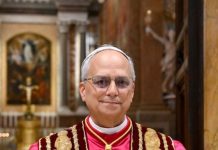
Newsroom (15/09/2025, Gaudium Press )In a poignant moment during an ecumenical celebration on September 14, 2025, at the Basilica of St. Paul Outside the Walls, Pope Leo XIV honored the memory of Abish Masih, a young Pakistani boy whose life was tragically cut short in a 2015 terrorist attack. Among the 1,624 new martyrs of the 21st century commemorated by the Commission for New Martyrs and Witnesses of the Faith, Abish’s story stood out as a powerful testament to faith and hope.

Abish, one of the 15 victims of the March 15, 2015, attacks by the Pakistani Taliban on two churches in Lahore’s Youhanabad neighborhood, was only a child when he died. The Catholic and Evangelical churches in this predominantly Christian area were targeted in a brutal assault that shook Pakistan’s minority community. Abish, a student at the School of Peace run by the Community of Sant’Egidio, was on the lawn outside the Catholic church, possibly playing or waiting for Mass, when the attack occurred. He succumbed to his injuries in the hospital, killed solely for his Christian faith, according to his grieving parents.
In his homily, Pope Leo XIV highlighted a heartfelt note found in Abish’s notebook, now preserved as a relic in the Basilica of St. Bartholomew on the Tiber Island, Rome’s sanctuary for 20th- and 21st-century martyrs. The note read: “Making the world a better place.” These words, penned by a child, resonated deeply with the pontiff, who urged the faithful to draw inspiration from Abish’s dream and bear courageous witness to their faith.
The Youhanabad attack also claimed the life of Akash Bashir, a 21-year-old Salesian student who heroically stopped a suicide bomber from entering St. John’s Church, sacrificing his life to save others. His cause for beatification, already advanced through the diocesan phase, is under review by the Congregation for the Causes of Saints, a testament to his bravery and selflessness.
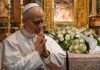
During the ecumenical liturgy, held on the feast of the Exaltation of the Cross, Pope Leo XIV emphasized the shared sacrifice of Christians across denominations. “Many brothers and sisters, even today, carry the same cross as the Lord,” he said, noting that these martyrs—laypeople, religious, and priests—die for their fidelity to the Gospel, their pursuit of justice, and their solidarity with the marginalized. Their deaths, he added, embody a “hope full of immortality,” a prophecy of good triumphing over evil in a world scarred by violence and division.
The Pope also invoked the concept of the “ecumenism of blood,” a term popularized by Pope Francis, to underscore the unity forged through martyrdom. “The witness of their martyrdom is more eloquent than any words,” Leo XIV declared. “Unity comes from the Cross of the Lord. May the blood of so many witnesses bring closer the blessed day when we will drink from the same cup of salvation.”
Abish Masih’s simple yet profound aspiration to make the world a better place continues to echo, a call to action for a more peaceful and fraternal humanity. His legacy, enshrined alongside other martyrs, serves as a reminder that even the youngest among us can inspire lasting change through faith and sacrifice.
- Raju Hasmukh with files from Asianews.it
Related Images: